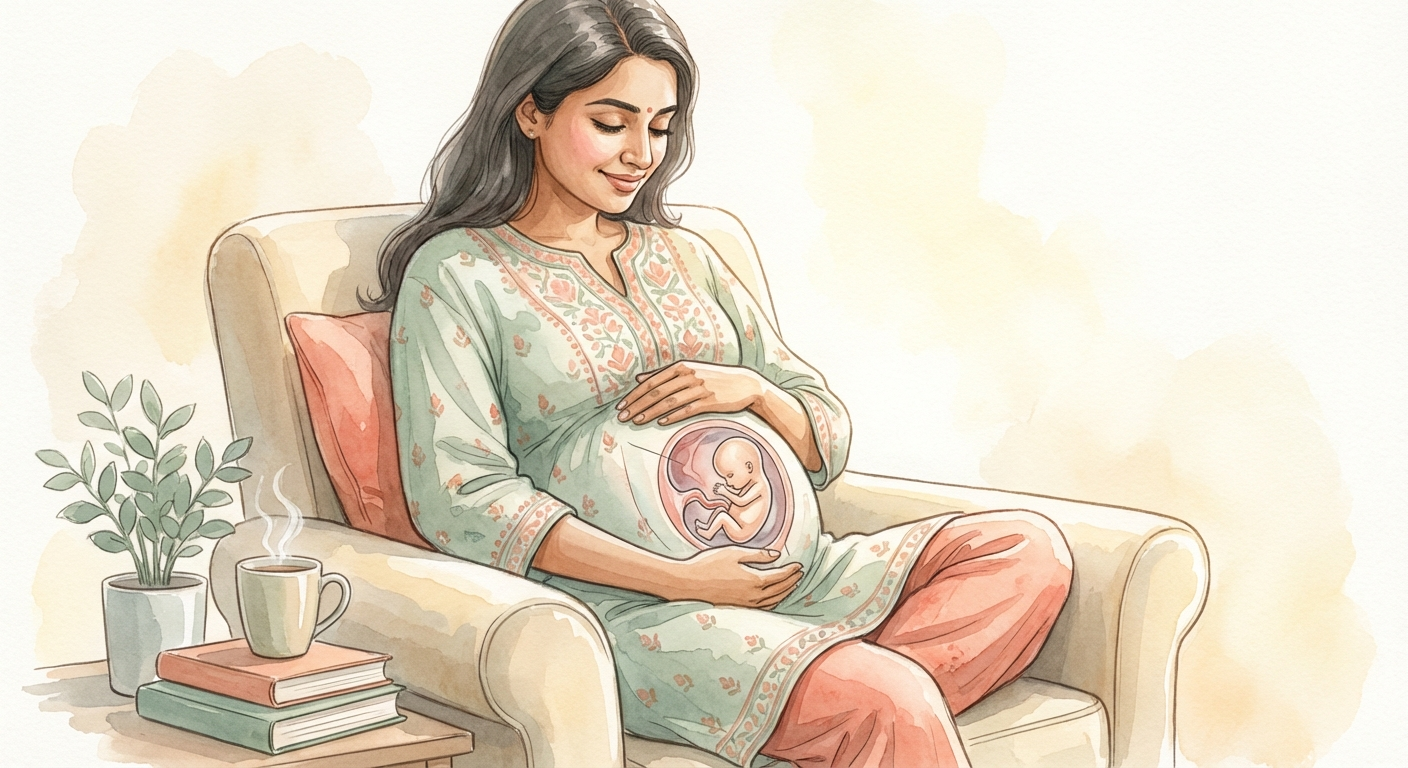
Week 12
Your baby is the size of a
Plum
5.4 cm
Length
14 g
Weight
12 Weeks Pregnant: First Trimester Nearly Complete
At 12 weeks pregnant, your baby is about the size of a plum (approximately 54-61 mm or 2.1-2.4 inches). All major organs and systems are fully formed. You’ll likely hear your baby’s heartbeat at a prenatal appointment this week using a Doppler device—an exciting milestone.
What’s Happening at 12 Weeks Pregnant?
Week 12 marks the end of the first trimester—a significant milestone in your pregnancy journey. You’ve made it through the most critical period of development, when all essential structures were forming. The risk of miscarriage decreases dramatically after this week, dropping to about 1-3%.
Your baby’s organs and body systems are complete and will now spend the remainder of pregnancy growing and maturing. The focus shifts from formation to refinement—organs becoming more efficient, the body growing larger, and systems preparing for life outside the womb.
For many people, week 12 brings welcome relief. Morning sickness and fatigue often begin improving significantly as pregnancy hormones start to stabilize. Energy returns, appetite improves, and the challenging early weeks start to feel like a distant memory.
How Big is My Baby at 12 Weeks?
Your baby at 12 weeks is about the size of a plum or lime, measuring approximately 54-61 millimeters (2.1-2.4 inches) from crown to rump and weighing about 14 grams (0.5 ounces).
Your baby has more than doubled in size since week 10. The body is lengthening, and while the head is still proportionally large, body proportions are becoming more balanced.
Baby Development at Week 12
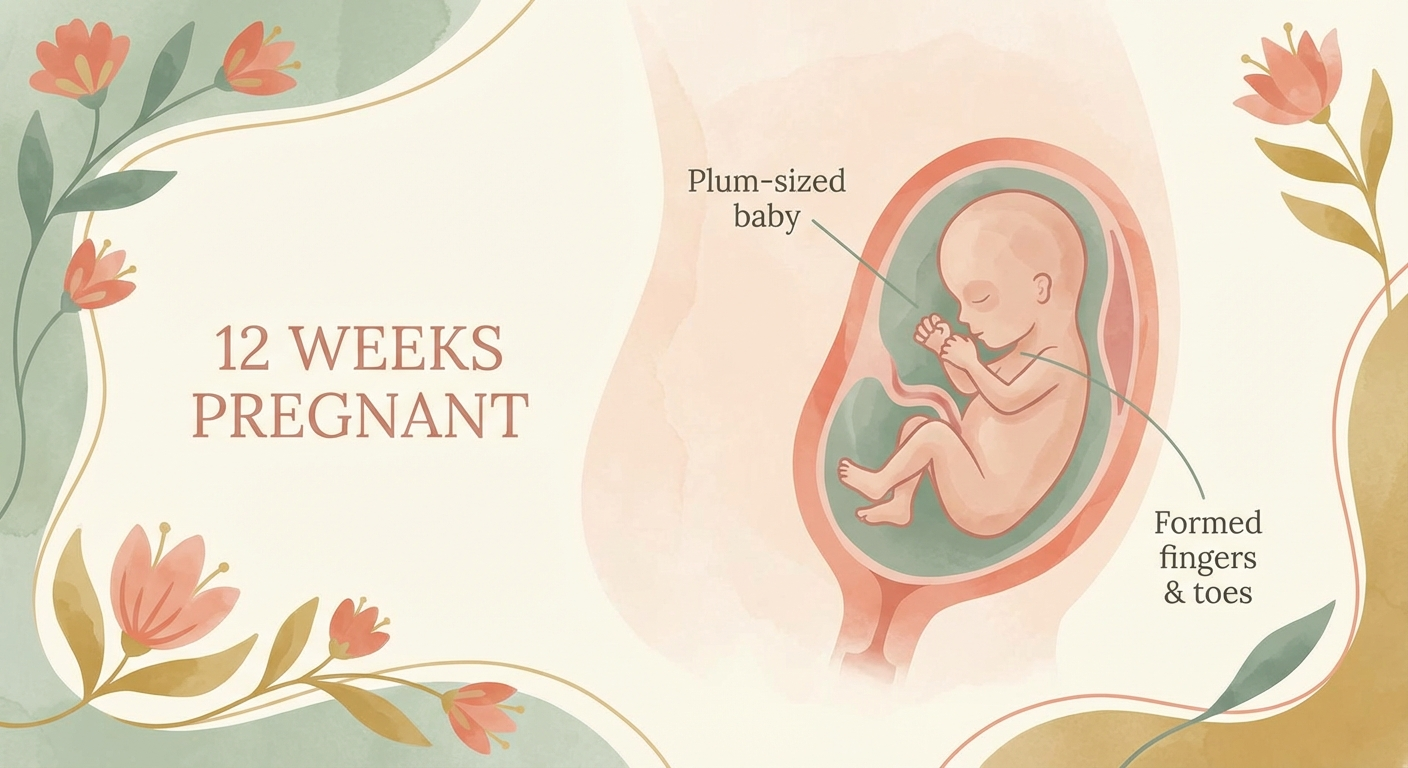
Week 12 brings refinement of existing systems and exciting new capabilities:
Fully formed systems: All major organs and body systems are complete. While they’ll continue maturing and growing, the essential structures are in place:
- Heart: Beating at 120-160 beats per minute, audible via Doppler
- Brain: Contains billions of nerve cells with complex connections forming
- Digestive system: Intestines practicing contractions
- Urinary system: Kidneys producing urine continuously
- Respiratory system: Lungs developing air sacs (though won’t function until after birth)
- Skeletal system: Bones hardening throughout the body
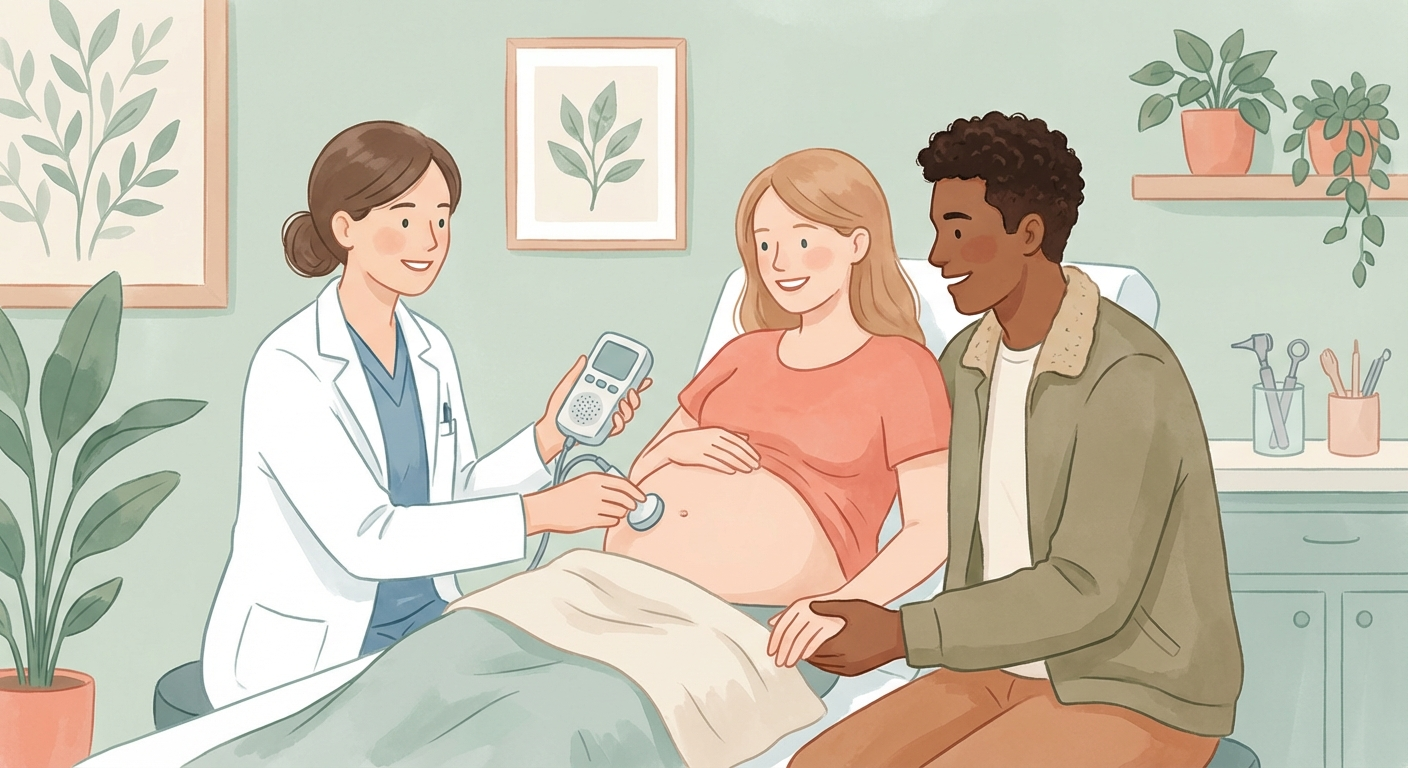
Hearing the heartbeat: This week, your healthcare provider can likely detect your baby’s heartbeat using a handheld Doppler device. Hearing that steady, rapid heartbeat is an emotional milestone for many expectant parents.
Movement and reflexes: Your baby is incredibly active, with developing reflexes:
- Opening and closing hands
- Curling toes
- Making sucking movements with the mouth
- Squinting, frowning, and grimacing
- Sucking thumb
- Hiccuping
- Practicing breathing movements (though not actual breathing)
Facial development: Your baby’s face is uniquely human with:
- Eyes positioned in front of the face (no longer on the sides)
- Ears in their final position
- Vocal cords forming
- Mouth that can open and close
- Tongue with taste buds
Fingernails and toenails: Nails are forming at the tips of fingers and toes.
Digestive system advances: The intestines are now entirely within the abdomen (no longer in the umbilical cord). The intestines are practicing peristalsis (wave-like muscle contractions that move food through the digestive tract).
Pituitary gland: The pituitary gland at the base of the brain is beginning to produce hormones that will regulate growth and development.
Bone marrow: Bone marrow is beginning to produce white blood cells, which will help fight infection.
Sex determination: If you’re having a boy, external genitalia may be distinguishable on a high-quality ultrasound, though many practitioners wait until the 18-20 week anatomy scan for gender determination.
Unique fingerprints: The ridges that will become your baby’s unique fingerprints are forming.
Common Symptoms at 12 Weeks Pregnant
Week 12 often marks the beginning of symptom relief for many people:
Decreasing morning sickness: Nausea and vomiting typically begin improving this week or next as hCG levels plateau. Some people experience immediate relief, while others find symptoms gradually fade over the next few weeks.
Returning energy: Fatigue often lessens as the placenta takes over hormone production from your ovaries. You may feel more like your pre-pregnancy self.
Increased appetite: As nausea fades, appetite often returns—sometimes with intensity. This is your body’s way of signaling it needs more calories to support your growing baby.
Visible baby bump: Many people develop a noticeable bump around this time, especially if this isn’t their first pregnancy. Others still look mostly the same—both are normal.
Decreased urinary frequency: As your uterus rises out of the pelvis and into the abdomen, pressure on your bladder may decrease slightly, reducing the need to urinate as frequently (though this will return in the third trimester).
Dizziness: Some people experience occasional dizziness or lightheadedness due to blood pressure changes and increased blood volume.
Heartburn: As your uterus expands, it can push stomach acid upward, causing heartburn or indigestion.
Mood stabilization: Emotional swings may lessen as hormones stabilize, though pregnancy can still bring ups and downs.
Increased vaginal discharge: Thin, milky discharge continues to be normal throughout pregnancy.
Skin changes: Some people develop the “pregnancy glow” (clear, radiant skin), while others experience acne, darkening of the skin on the face (melasma), or a dark line down the abdomen (linea nigra).
When to Call Your Doctor
Contact your healthcare provider if you experience:
- Heavy bleeding or passing clots
- Severe abdominal pain
- Fever above 100.4°F (38°C)
- Sudden swelling of hands, feet, or face
- Severe headache with vision changes
- Signs of infection
Tips for Week 12
Celebrate reaching the second trimester: You’ve made it through the most challenging and critical period of pregnancy. This is a major accomplishment worth celebrating.
Schedule your NT ultrasound: If you’re having first-trimester screening, it’s typically performed between weeks 11-13. This ultrasound measures the fluid at the back of your baby’s neck (nuchal translucency) to screen for chromosomal conditions.
Consider pregnancy announcements: Many people feel comfortable announcing their pregnancy after the first trimester when miscarriage risk drops significantly.
Start second-trimester planning: Research prenatal tests you may want (like the anatomy ultrasound at weeks 18-20), consider whether you want to learn your baby’s sex, and think about maternity clothes shopping.
Enjoy returning appetite: As nausea fades, take advantage of renewed appetite to eat nutritious, balanced meals. Focus on whole foods rich in protein, iron, calcium, and healthy fats.
Stay active: As energy returns, regular gentle exercise can boost mood, energy, and overall pregnancy health. Walking, swimming, and prenatal yoga are excellent options.
Stay hydrated: Continue drinking 8-10 glasses of water daily.
Manage heartburn: Eat small, frequent meals; avoid trigger foods; don’t lie down immediately after eating; and sleep with your head slightly elevated.
Take bump photos: This is often when bumps become visible—a great time to start documenting your changing body.
Connect with your support system: Share your excitement about reaching this milestone with your partner, family, or friends.
Keep Your Pregnancy Organized with Nooko
Set your pregnancy using the first day of your last menstrual period or the due date from a dating scan to follow week-specific guidance and your due-date countdown. Use the journal for selected symptoms and private notes, save bump photos, manage checklists, reminders, and prenatal appointments, and share supported updates with an approved partner.
Nooko provides general information and recording tools, not medical advice or diagnosis. Some features require Nooko+.
Download Nooko on the App Store
References
- Cleveland Clinic. (2025). “Fetal Development: Week-by-Week Stages of Pregnancy.” https://my.clevelandclinic.org/health/articles/7247-fetal-development-stages-of-growth
- Johns Hopkins Medicine. (2024). “The First Trimester.” https://www.hopkinsmedicine.org/health/wellness-and-prevention/the-first-trimester
- Mayo Clinic. (2024). “Symptoms of pregnancy: What happens first.” https://www.mayoclinic.org/healthy-lifestyle/getting-pregnant/in-depth/symptoms-of-pregnancy/art-20043853
- What to Expect. (2025). “12 Weeks Pregnant: Baby Development, Symptoms & Signs.” https://www.whattoexpect.com/pregnancy/week-by-week/week-12.aspx
- American College of Obstetricians and Gynecologists. (2025). “How Your Fetus Grows During Pregnancy.” https://www.acog.org/womens-health/faqs/how-your-fetus-grows-during-pregnancy
- Mayo Clinic. (2024). “Fetal development: The first trimester.” https://www.mayoclinic.org/healthy-lifestyle/pregnancy-week-by-week/in-depth/prenatal-care/art-20045302
- What to Expect. (2025). “How Babies Breathe in the Womb.” https://www.whattoexpect.com/pregnancy/fetal-health/how-babies-breathe-womb
Get Nooko Updates
Pregnancy tips and product updates, sent occasionally.
No spam. Privacy policy. Consumer health privacy. Unsubscribe anytime.
Ready to start tracking?
Download Nooko free — your pregnancy companion from week 1 to birth.