Week 16
Your baby is the size of a
Avocado
11.6 cm
Length
100 g
Weight
16 Weeks Pregnant: First Movements May Be Felt Soon
At 16 weeks pregnant, your baby is about the size of an avocado (approximately 116-130 mm or 4.6-5.1 inches). Your baby’s circulatory system is fully functional, and facial muscles are working—allowing for a full range of expressions. You may start feeling first movements anytime now, especially if this isn’t your first pregnancy.
What’s Happening at 16 Weeks Pregnant?
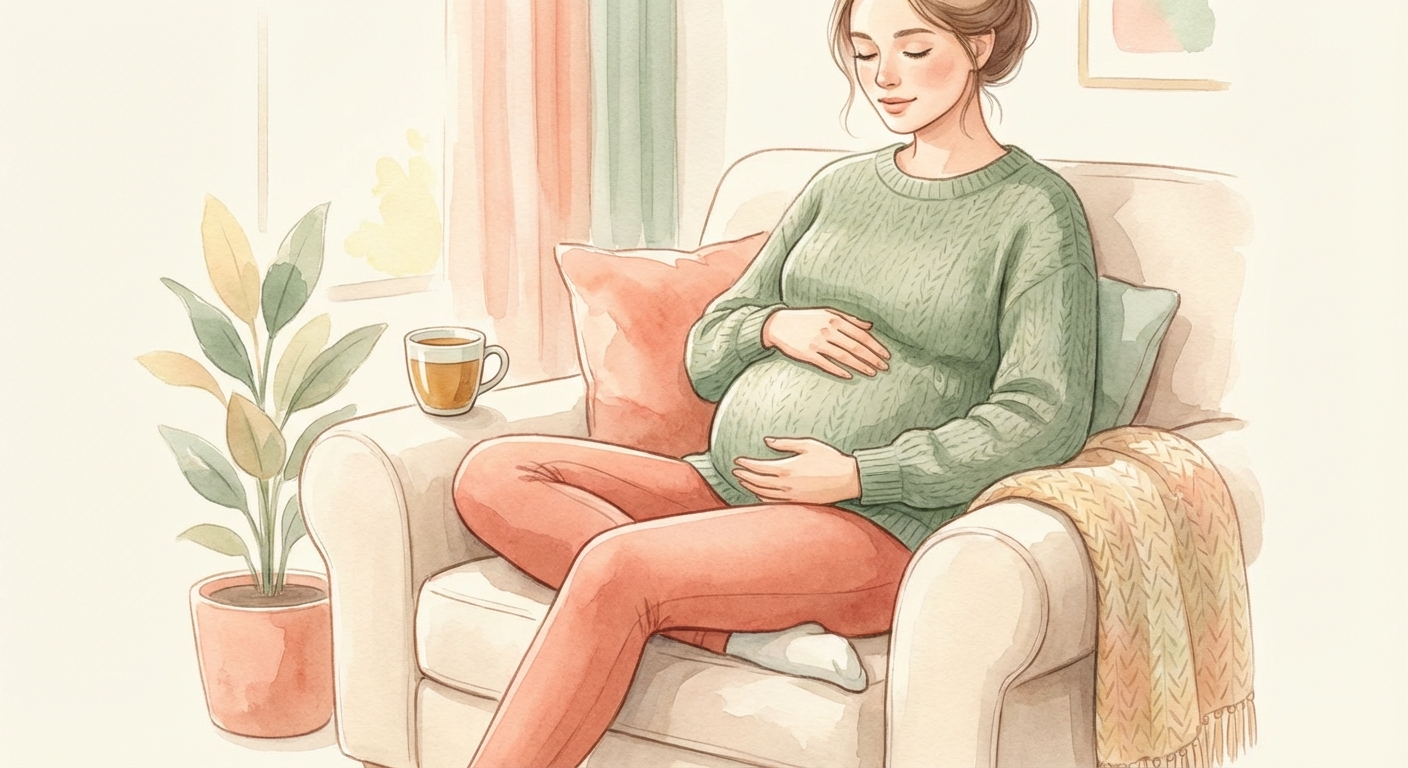
Week 16 brings you to the middle of your second trimester, often called the “golden period” of pregnancy. You’re likely feeling great—energetic, comfortable, and excited about your growing baby. Your bump is visible but not yet unwieldy, making this an ideal time for staying active and preparing for your baby’s arrival.
Your baby is growing rapidly and becoming more active every day. Movements are becoming stronger and more frequent, and you may start feeling them soon. These first movements, called “quickening,” feel like flutters, bubbles, or gentle pokes. Many first-time parents don’t feel movements until weeks 18-20, while those who’ve been pregnant before may notice them as early as week 14-16.
This is also around the time you might have amniocentesis if you’re having prenatal genetic testing, or you might be preparing for your anatomy ultrasound at weeks 18-20.
How Big is My Baby at 16 Weeks?
Your baby at 16 weeks is about the size of an avocado, measuring approximately 116-130 millimeters (4.6-5.1 inches) from crown to rump and weighing about 100-110 grams (3.5-3.9 ounces).
Your baby has nearly doubled in weight in just two weeks. From crown to heel (head to toe), your baby now measures about 5-6 inches total length.
Baby Development at Week 16
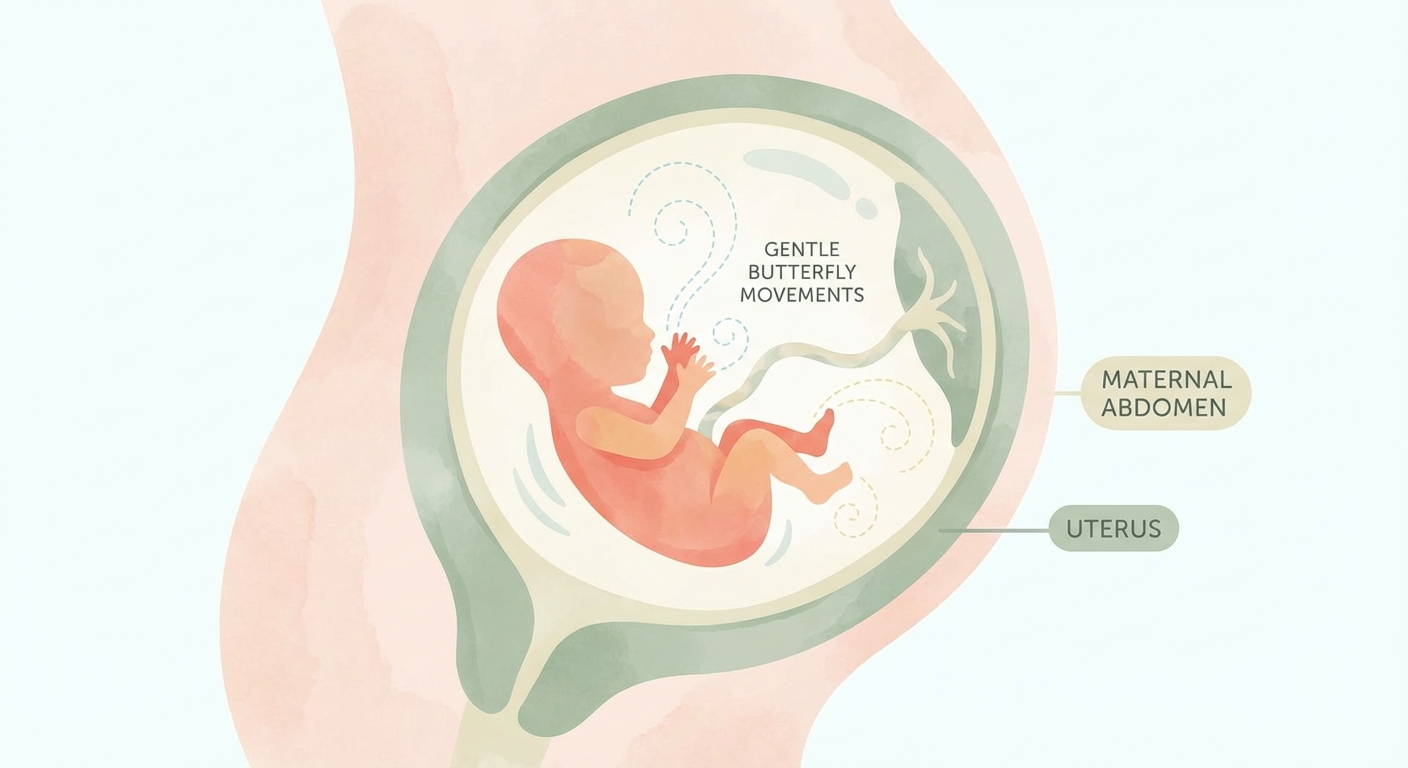
Significant functional and physical milestones characterize this week:
Circulatory system functioning: Your baby’s heart and blood vessels are fully functional, forming a complete circulatory system. The heart is pumping about 28 liters (7.4 gallons) of blood per day—an impressive feat for such a tiny organ.
Facial muscle control: Your baby can make a full range of facial expressions—smiling, frowning, squinting, furrowing the brow. These movements help develop facial muscles and may reflect developing emotions, though they’re largely reflexive at this stage.
Head control: Your baby’s neck is strong enough to hold the head more upright rather than slumped forward. This allows for more controlled head movements.
Coordinated movement: Your baby is very active, with movements becoming more purposeful:
- Somersaults and flips
- Kicking and punching
- Grasping the umbilical cord
- Sucking thumb
- Bringing hands to face
- Practicing breathing movements
Sensory development:
- Hearing: Your baby can now hear sounds from outside the womb—your voice, music, loud noises
- Vision: Can detect light through closed eyelids
- Taste: Actively tasting amniotic fluid
- Touch: Skin is sensitive to touch
Skeletal development: Bones continue hardening throughout the body. The skeletal system is becoming stronger and more defined.
Nervous system: Nerve cells are multiplying rapidly, and connections between nerves and muscles are strengthening, enabling more coordinated movements.
Digestive system: Your baby is swallowing more amniotic fluid, and the digestive system is processing it. Waste products are excreted as urine back into the amniotic fluid (which is completely normal and healthy).
Hair and nails: Hair on the head may be visible now, and eyebrows and eyelashes continue growing. Fingernails and toenails are growing.
Patterns developing: Your baby is beginning to develop patterns of sleeping and waking, though these don’t yet align with day and night.
Size proportions: The body is now larger than the head, creating more balanced proportions.
Common Symptoms at 16 Weeks Pregnant
Week 16 typically continues the comfortable second-trimester pattern:
High energy: Most people feel energetic and capable at this stage.
Good appetite: With nausea gone, appetite is usually strong and healthy.
Visible bump: Your bump is likely noticeable, especially to those who know you well.
Glowing skin: The “pregnancy glow” (increased blood flow to skin) is common in the second trimester.
Round ligament pain: Sharp, brief pains in your lower abdomen when changing positions are normal.
Backache: As your belly grows and your center of gravity shifts, you may experience lower back pain.
Stuffy nose: Pregnancy rhinitis may continue.
Heartburn: Ongoing as your uterus expands.
Increased vaginal discharge: Normal and protective.
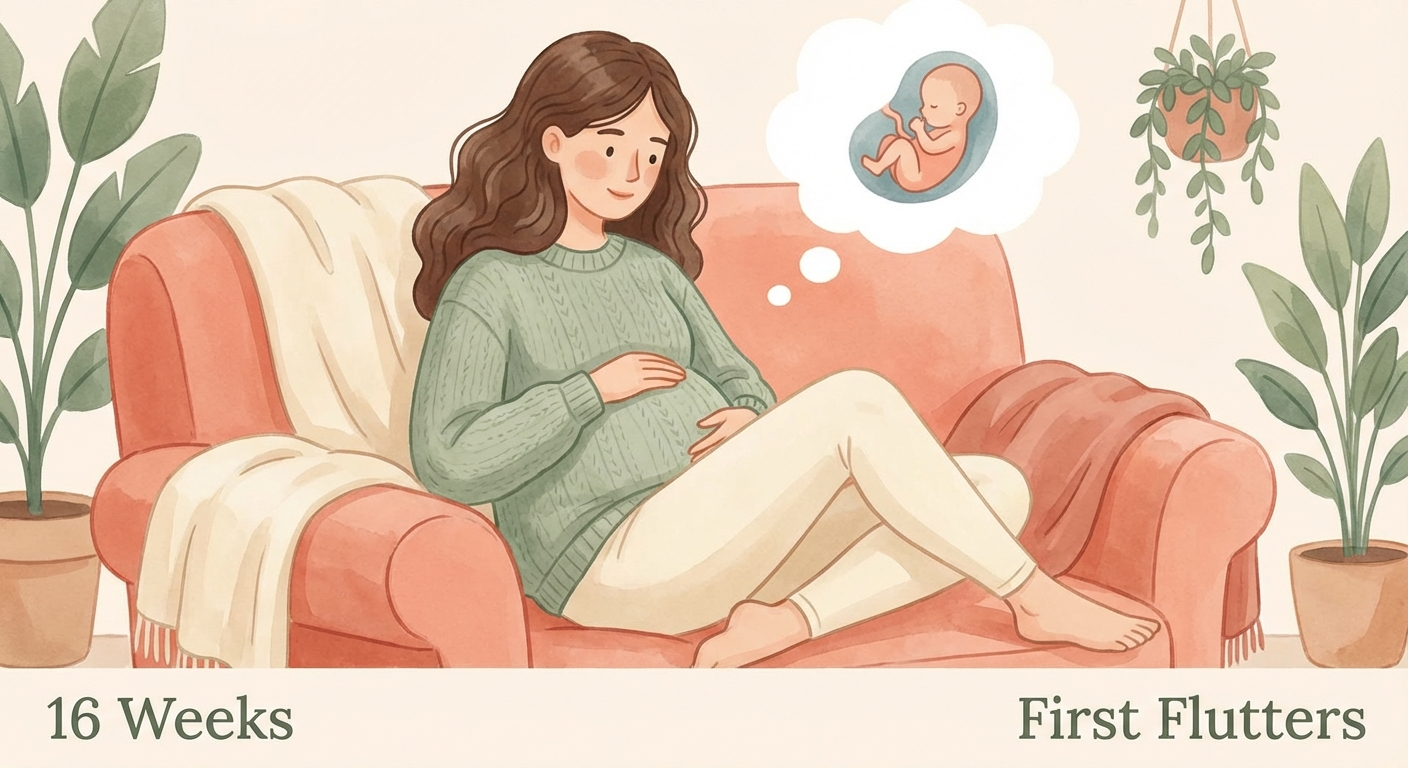
Possible first movements: If this isn’t your first pregnancy, you might feel flutters, bubbles, or gentle pokes—your baby’s movements!
Weight gain: You’ve likely gained 5-10 pounds by now (though everyone gains at different rates, and some gain less).
Breast growth: Your breasts continue growing and may feel less tender than in the first trimester.
Better mood: Physical comfort often corresponds with improved emotional well-being.
When to Call Your Doctor
Contact your healthcare provider if you experience:
- Heavy bleeding
- Severe abdominal pain
- Fever above 100.4°F (38°C)
- Painful urination or inability to urinate
- Sudden severe swelling
- Severe persistent headache with vision changes
Tips for Week 16
Pay attention to first movements: You may start feeling flutters anytime now, especially if this isn’t your first pregnancy. These early movements are subtle—like bubbles, butterflies, or gentle pokes.
Stay active: Continue regular exercise to maintain strength, flexibility, and cardiovascular health. Walking, swimming, and prenatal yoga are excellent choices.
Support your back: Use proper posture, avoid heavy lifting, wear supportive shoes, and consider a maternity support belt if back pain is bothersome.
Eat calcium-rich foods: Your baby’s bones are hardening rapidly, requiring plenty of calcium. Aim for 1,000 mg daily.
Stay hydrated: Drink 8-10 glasses of water daily.
Sleep on your left side: This position optimizes blood flow to your baby. Use pillows to support your belly and between your knees.
Talk and sing to your baby: Your baby can hear your voice, and hearing it in the womb may be comforting after birth.
Schedule your anatomy ultrasound: If you haven’t already, schedule the detailed anatomy scan for weeks 18-20.
Consider prenatal classes: Register for childbirth education, breastfeeding, newborn care, or infant CPR classes.
Plan a babymoon: If you want to travel before your baby arrives, the second trimester is the safest and most comfortable time.
Prepare for rapid weight gain: You may gain about 1 pound per week from now through the end of pregnancy. This is normal and healthy.
Keep Your Pregnancy Organized with Nooko
Set your pregnancy using the first day of your last menstrual period or the due date from a dating scan to follow week-specific guidance and your due-date countdown. Use the journal for selected symptoms and private notes, save bump photos, manage checklists, reminders, and prenatal appointments, and share supported updates with an approved partner.
Nooko provides general information and recording tools, not medical advice or diagnosis. Some features require Nooko+.
Download Nooko on the App Store
References
- American College of Obstetricians and Gynecologists. (2025). “How Your Fetus Grows During Pregnancy.” https://www.acog.org/womens-health/faqs/how-your-fetus-grows-during-pregnancy
- Mayo Clinic. (2024). “Fetal development: The 2nd trimester.” https://www.mayoclinic.org/healthy-lifestyle/pregnancy-week-by-week/in-depth/fetal-development/art-20046151
- NCBI. (2025). “Fetal Movement.” StatPearls. https://www.ncbi.nlm.nih.gov/books/NBK470566/
- BabyCenter. (2025). “16 weeks pregnant: Symptoms, baby development, and more.” https://www.babycenter.com/pregnancy/week-by-week/16-weeks-pregnant
- Cleveland Clinic. (2025). “Fetal Development: Week-by-Week Stages of Pregnancy.” https://my.clevelandclinic.org/health/articles/7247-fetal-development-stages-of-growth
- Mayo Clinic. (2024). “Symptoms of pregnancy: What happens first.” https://www.mayoclinic.org/healthy-lifestyle/getting-pregnant/in-depth/symptoms-of-pregnancy/art-20043853
Get Nooko Updates
Pregnancy tips and product updates, sent occasionally.
No spam. Privacy policy. Consumer health privacy. Unsubscribe anytime.
Ready to start tracking?
Download Nooko free — your pregnancy companion from week 1 to birth.