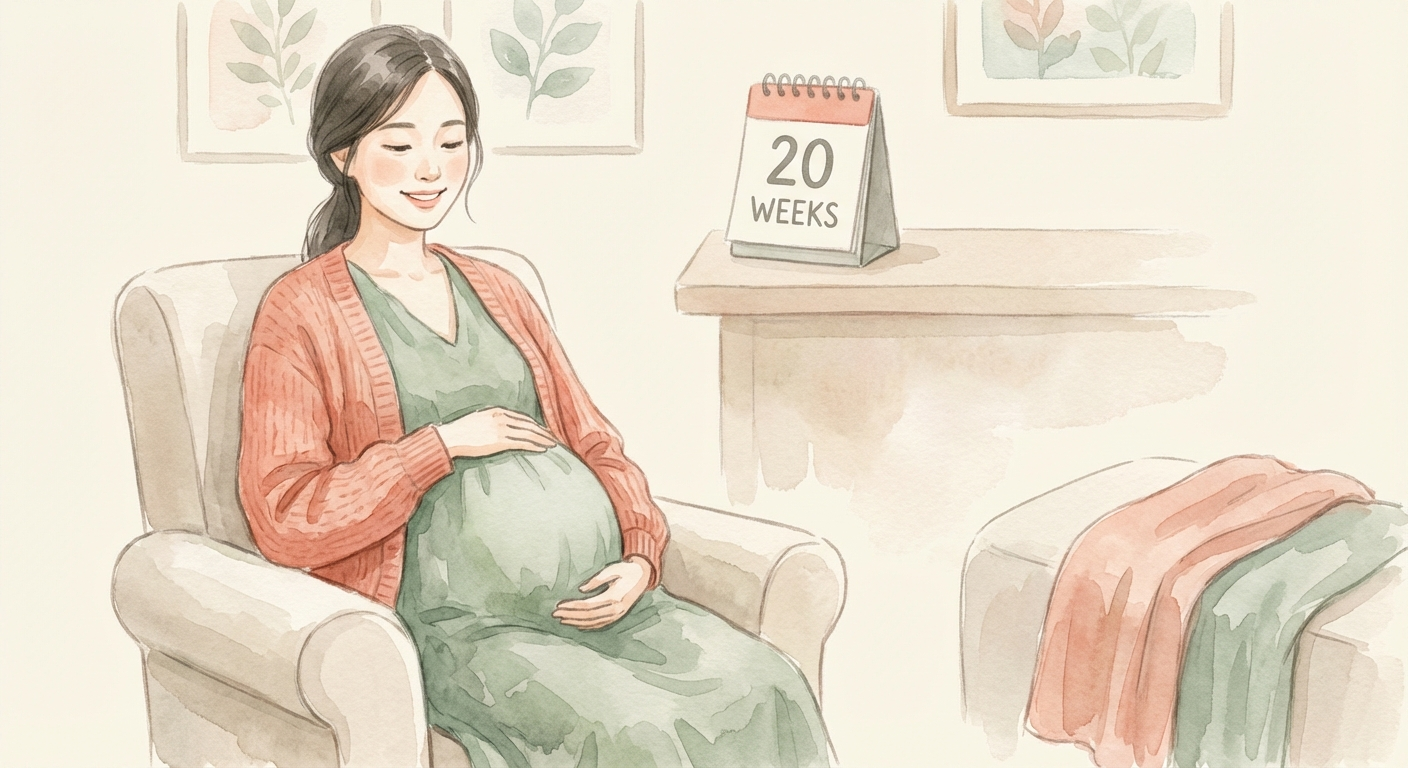
Week 20
Your baby is the size of a
Banana
25.6 cm
Length
300 g
Weight
20 Weeks Pregnant: Halfway Through Your Pregnancy!
At 20 weeks pregnant, your baby is about the size of a banana (approximately 160-170 mm or 6.3-6.7 inches). Congratulations—you’re halfway through your pregnancy! Your baby’s senses are functional, and you’re likely feeling regular movements now. This week typically brings the anatomy ultrasound if you haven’t had it yet.
What’s Happening at 20 Weeks Pregnant?
Week 20 is a major milestone: you’re officially halfway through pregnancy! This is an exciting time to reflect on how far you’ve come and look ahead to the second half of your journey. You’ve completed the challenging first trimester and are enjoying the comfortable second trimester.
Your baby is growing rapidly and is very active. If you’ve been feeling movements, they’re likely becoming stronger and more frequent. If you haven’t felt movements yet, you almost certainly will within the next week or two.
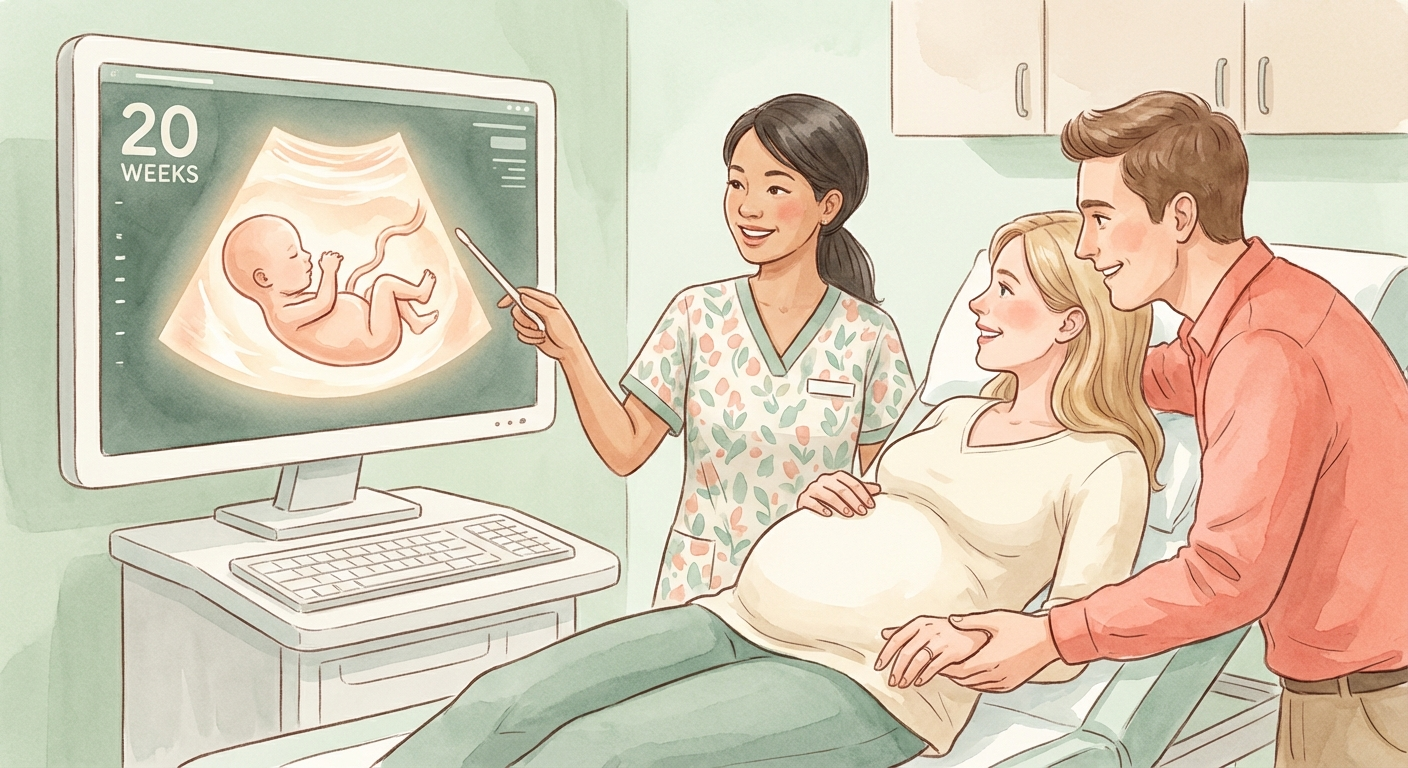
This is typically the week of your anatomy ultrasound (though it may have been last week or may be next week). This detailed scan provides important information about your baby’s development and is often when people find out their baby’s sex.
How Big is My Baby at 20 Weeks?
Your baby at 20 weeks is about the size of a banana, measuring approximately 160-170 millimeters (6.3-6.7 inches) from crown to rump, or about 10 inches (25 cm) from head to toe. Your baby weighs about 300-320 grams (10.5-11.3 ounces).
From this point forward, your baby will be measured from head to toe rather than crown to rump since legs are now more extended.
Baby Development at Week 20
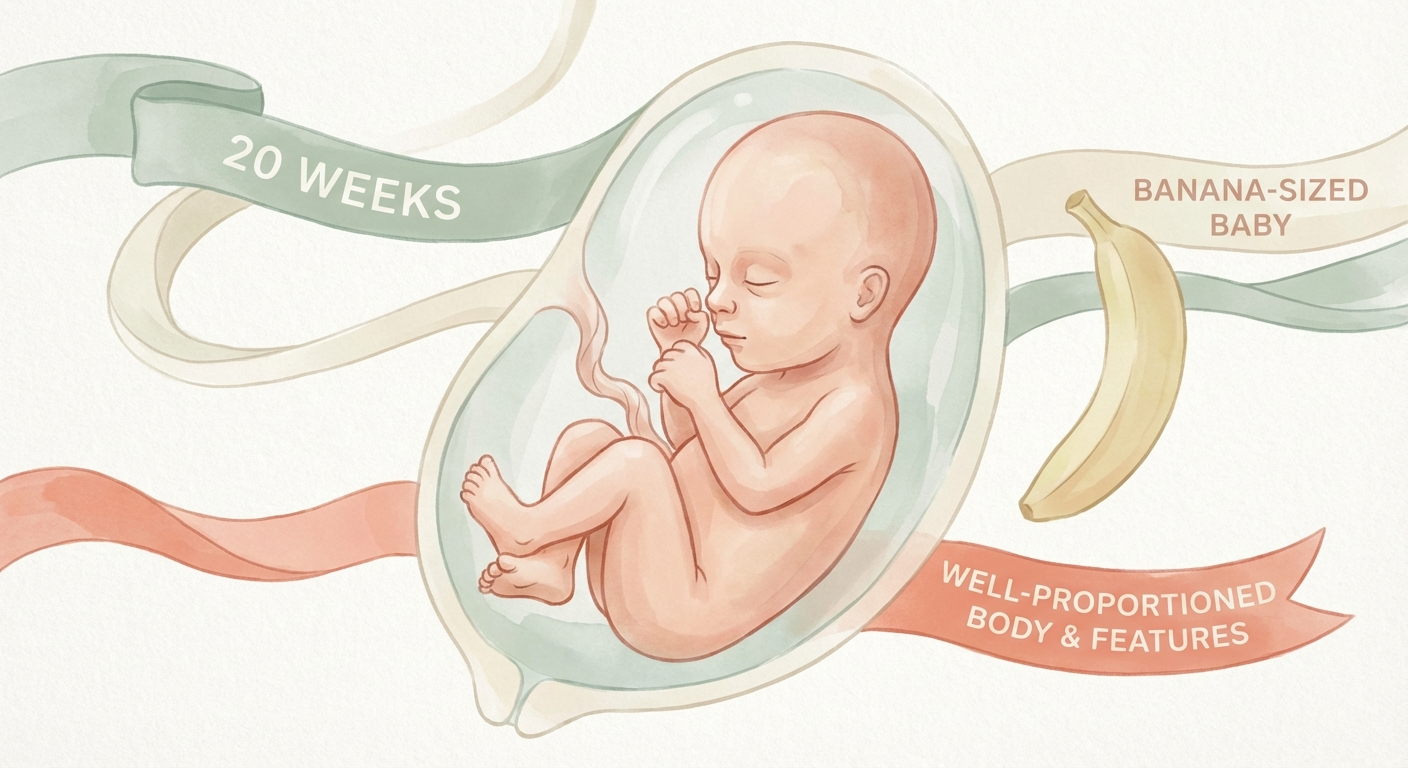
Remarkable functional capabilities define this halfway milestone:
Fully functioning senses: All five senses are operational:
- Hearing: Can hear and may respond to music, voices, and sounds
- Taste: Actively tasting amniotic fluid flavored by what you eat
- Touch: Sensitive to touch throughout the body
- Sight: Can detect light through closed eyelids
- Smell: Smell receptors are functional
Vernix protection: A thick layer of vernix caseosa protects your baby’s skin from the amniotic fluid.
Meconium formation: Your baby’s digestive system is producing meconium—the first stool, made of amniotic fluid, dead cells, and other substances. This will be expelled after birth.
Active movement: Your baby moves frequently:
- Strong kicks and punches
- Somersaults and rolls
- Hiccups
- Sucking thumb
- Playing with hands and feet
- Grasping the umbilical cord
Sleep-wake cycles: Your baby has established patterns of sleeping and waking, though these don’t align with day and night. Sleep cycles last about 20-40 minutes.
Swallowing practice: Your baby swallows amniotic fluid continuously, practicing for feeding after birth.
Hair growth: Hair on the head is more substantial, and fine body hair (lanugo) covers most of the body.
Skin layers: Skin has multiple layers now, though it’s still translucent.
Fat accumulation: “Baby fat” continues developing beneath the skin for warmth and energy.
Brain development: The brain is developing rapidly, with billions of neurons forming connections. Specialized areas for senses, movement, and eventually thought are establishing.
Reproductive organs: If you’re having a boy, testicles are descending (though they won’t reach the scrotum until later). If you’re having a girl, the uterus is fully formed and primitive eggs are in the ovaries.
Common Symptoms at 20 Weeks Pregnant
Week 20 typically brings continued comfort with some new physical changes:
Regular fetal movements: Most people feel movements regularly by now. These are becoming stronger and more distinct—graduated from flutters to actual kicks.
Visible bump: Your bump is obvious, and you likely “look pregnant” to everyone.
Increased energy: Most people still have good energy during the second trimester.
Healthy appetite: Your baby is growing rapidly and needs additional nutrition.
Lower back pain: Common as your belly grows.
Heartburn: Ongoing as your expanding uterus pushes on your stomach.
Shortness of breath: Your growing uterus is pushing up on your diaphragm, reducing lung capacity slightly.
Swollen feet and ankles: Mild swelling is normal, especially at the end of the day.
Leg cramps: May occur, particularly at night.
Increased vaginal discharge: Normal throughout pregnancy.
Skin changes: Linea nigra (dark abdominal line), darkening areolas, possible melasma.
Belly button changes: Your belly button may start protruding as your uterus expands.
Weight gain: You’ve likely gained 10-15 pounds by now, with steady weight gain continuing (about 1 pound per week).
Braxton Hicks contractions: Some people start experiencing these “practice contractions”—painless tightening of the uterus that lasts 30 seconds to 2 minutes.
When to Call Your Doctor
Contact your healthcare provider if you experience:
- Heavy bleeding
- Severe abdominal pain
- Regular, painful contractions
- Fever above 100.4°F (38°C)
- Sudden severe swelling
- Severe persistent headache with vision changes
- Decreased fetal movement
Tips for Week 20
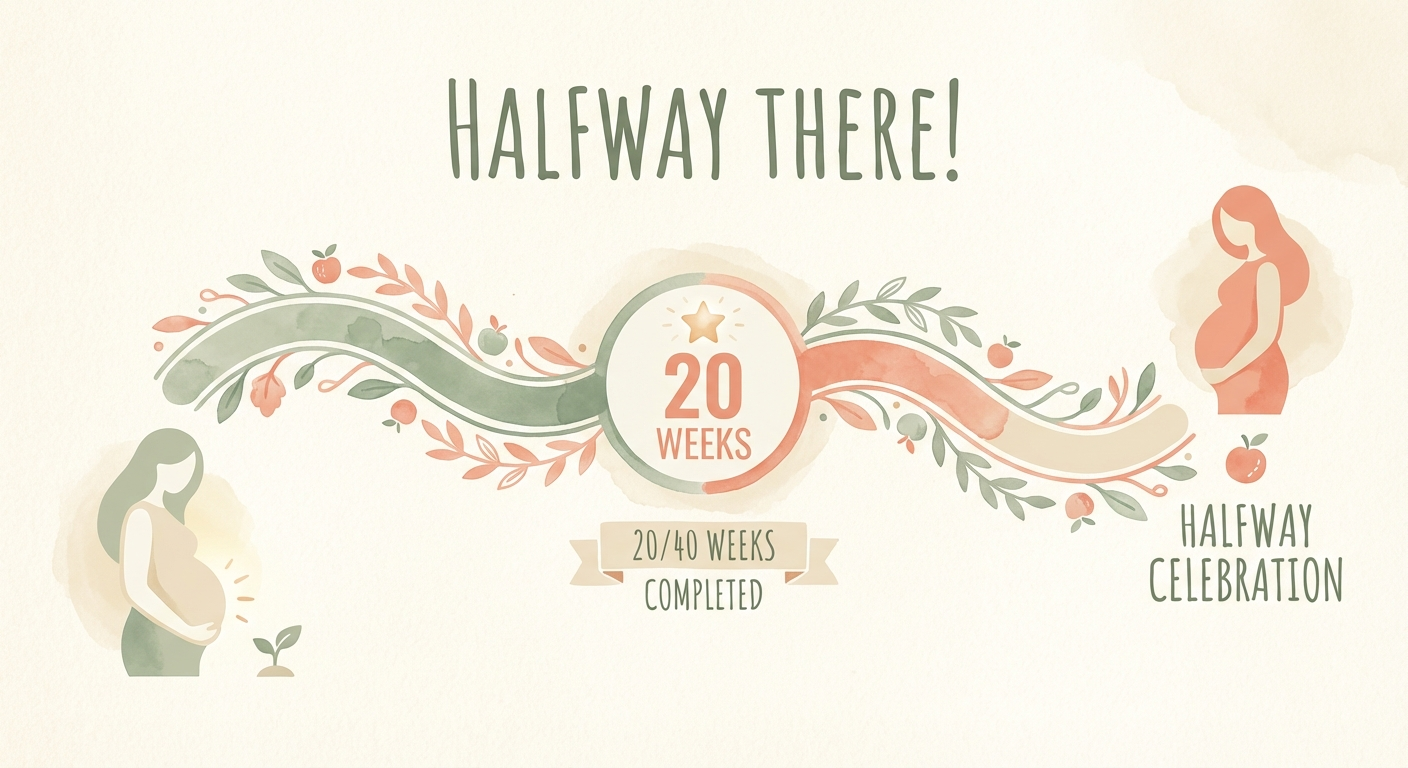
Celebrate the halfway point! You’re at a major milestone—halfway through your pregnancy journey. Take time to celebrate how far you’ve come.
Attend your anatomy ultrasound: If you haven’t had it yet, this detailed scan examines your baby’s organs, limbs, brain, heart, and overall development. It’s an amazing opportunity to see your baby in detail.
Ask questions at your scan: Don’t hesitate to ask the sonographer to explain what you’re seeing or point out specific features.
Learn your baby’s sex (or don’t): This is typically when sex can be reliably determined. Decide whether you want to know or prefer to wait until birth.
Continue balanced nutrition: Focus on nutrient-dense foods. You need about 300-350 extra calories daily in the second trimester.
Stay active: Continue regular, moderate exercise to maintain strength, flexibility, and cardiovascular health.
Address shortness of breath: Practice good posture, avoid overexertion, sleep propped up slightly, and take breaks when needed.
Manage swelling: Elevate feet when resting, avoid prolonged standing, stay hydrated, reduce sodium, and wear compression socks.
Sleep on your left side: This position optimizes blood flow to your baby.
Start planning baby shower: If someone is hosting a shower for you, now is a good time to start planning.
Complete baby registries: Finalize your registries with essential items.
Consider hiring help: Start researching postpartum doulas, night nurses, or meal delivery services if desired.
Keep Your Pregnancy Organized with Nooko
Set your pregnancy using the first day of your last menstrual period or the due date from a dating scan to follow week-specific guidance and your due-date countdown. Use the journal for selected symptoms and private notes, save bump photos, manage checklists, reminders, and prenatal appointments, and share supported updates with an approved partner.
Nooko provides general information and recording tools, not medical advice or diagnosis. Some features require Nooko+.
Download Nooko on the App Store
References
- Mayo Clinic. (2024). “Fetal development: The 2nd trimester.” https://www.mayoclinic.org/healthy-lifestyle/pregnancy-week-by-week/in-depth/fetal-development/art-20046151
- Cleveland Clinic. (2023). “20 Week Ultrasound (Anatomy Scan): What To Expect.” https://my.clevelandclinic.org/health/diagnostics/22644-20-week-ultrasound
- NHS. (2024). “You and your baby at 20 weeks pregnant.” https://www.nhs.uk/best-start-in-life/pregnancy/week-by-week-guide-to-pregnancy/2nd-trimester/week-20/
- Cleveland Clinic. (2025). “Fetal Development: Week-by-Week Stages of Pregnancy.” https://my.clevelandclinic.org/health/articles/7247-fetal-development-stages-of-growth
Get Nooko Updates
Pregnancy tips and product updates, sent occasionally.
No spam. Privacy policy. Consumer health privacy. Unsubscribe anytime.
Ready to start tracking?
Download Nooko free — your pregnancy companion from week 1 to birth.