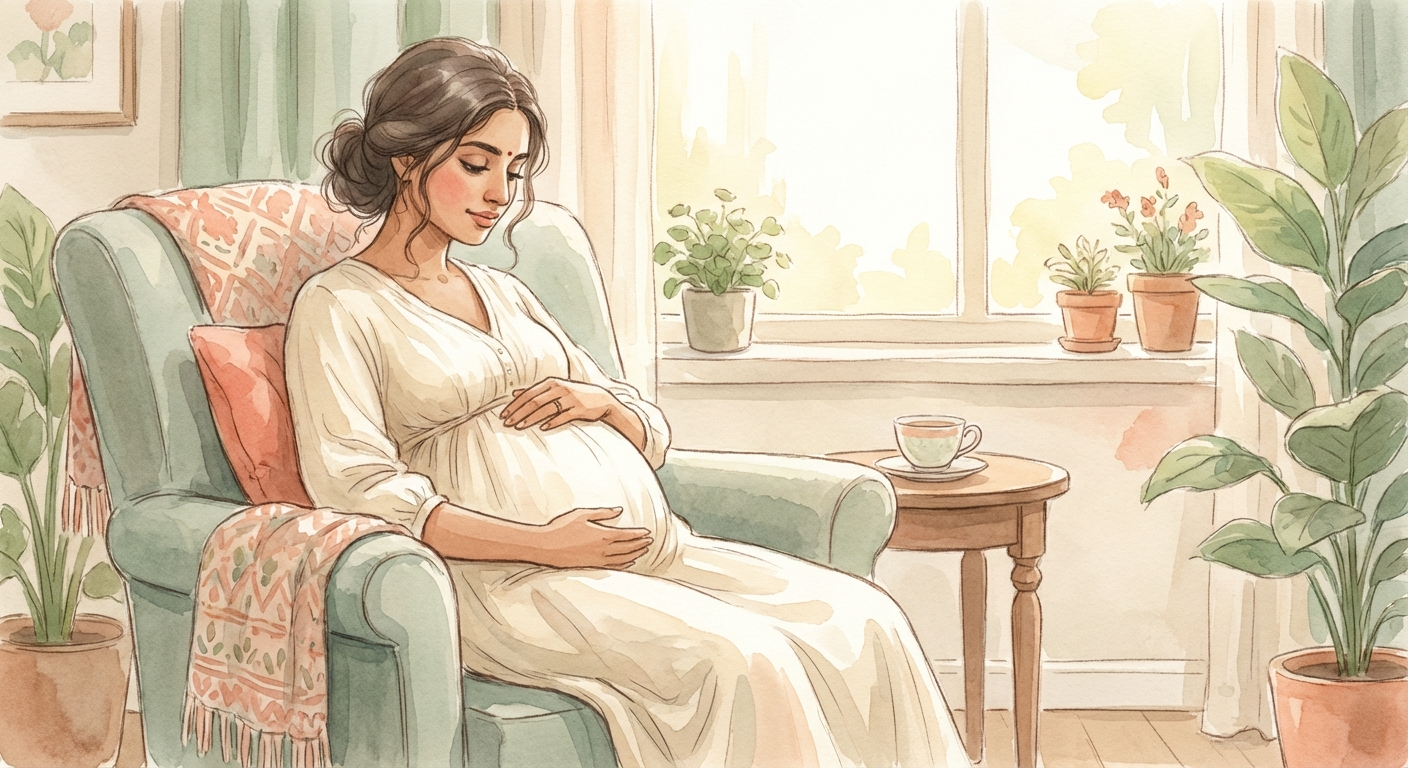
Week 22
Your baby is the size of a
Papaya
27.8 cm
Length
430 g
Weight
22 Weeks Pregnant: Baby's Sense of Touch Fully Developed
At 22 weeks pregnant, your baby is about the size of a papaya (approximately 27-28 cm or 10.6-11 inches head to toe). Your baby’s sense of touch is fully developed—they can feel when you touch your belly. Lips, eyelids, and eyebrows are well-formed, and your baby looks more like a newborn every day.
What’s Happening at 22 Weeks Pregnant?
Week 22 finds you comfortably past the halfway point, enjoying the best phase of pregnancy. You’re likely feeling great, with plenty of energy and minimal discomfort. Your baby is very active, and you’re probably feeling movements throughout the day.
Your baby is looking increasingly like a newborn—facial features are distinct, proportions are balanced, and tiny details like eyebrows, eyelashes, and lips are well-formed. Inside, organs and systems are maturing rapidly, preparing for life outside the womb.
This is an excellent time to finalize nursery plans, register for baby essentials, and enjoy activities that may be more challenging later in pregnancy.
How Big is My Baby at 22 Weeks?
Your baby at 22 weeks is about the size of a papaya or spaghetti squash, measuring approximately 27-28 centimeters (10.6-11 inches) from head to toe and weighing about 430-450 grams (15.2-15.9 ounces).
Your baby is approaching 1 pound in weight—a significant milestone. Fat continues accumulating, filling out the skin and giving your baby a more rounded appearance.
Baby Development at Week 22
Remarkable sensory and physical refinements characterize this week:
Fully developed sense of touch: Your baby’s sense of touch is now fully functional. They can feel when you touch or rub your belly, touch their own face and body, and explore the environment by touching the umbilical cord and uterine walls.
Facial features well-defined: Your baby’s face looks increasingly like a newborn:
- Eyebrows and eyelashes are visible
- Eyelids are fully formed (still fused shut)
- Lips are well-defined
- Nose is prominent
- Ears are in their final position
Developing reflexes: Your baby practices important reflexes:
- Rooting reflex (turning head toward touch)
- Sucking reflex
- Grasping reflex
- Startle reflex (responding to sudden sounds or movements)
Pancreas development: The pancreas is developing steadily and producing important hormones, including insulin.
Reproductive organs: If you’re having a boy, his testicles are beginning to descend from the abdomen (though they won’t reach the scrotum until the third trimester). If you’re having a girl, her uterus and ovaries are fully formed, and primitive eggs are in the ovaries.
Active movement: Your baby moves frequently:
- Strong kicks and punches
- Rolling and somersaults
- Hiccups (you may feel these as rhythmic movements)
- Grasping hands and feet
- Touching face
Lung maturation: Lungs continue developing air sacs and producing surfactant, though they wouldn’t yet function efficiently if baby were born now.
Brain growth: Rapid brain development continues, with billions of neurons forming connections. The brain now has a rapid eye movement (REM) sleep phase, suggesting your baby may be dreaming.
Skin development: Skin is still thin and wrinkled but becoming less transparent as fat accumulates. Vernix and lanugo provide protection.
Bone growth: Bones throughout the body continue hardening and lengthening.
Blood cell production: Bone marrow is fully responsible for producing blood cells now.
Common Symptoms at 22 Weeks Pregnant
Week 22 typically brings continued comfort with some physical changes:
Strong, frequent fetal movements: Movements are obvious and regular, occurring multiple times daily.
Growing bump: Your bump is substantial and growing steadily.
Good energy: Most people maintain good energy during this phase.
Increased appetite: Your baby needs additional nutrition as growth accelerates.
Shortness of breath: Your expanding uterus continues pushing on your diaphragm.
Lower back pain: Common as your belly grows and your center of gravity shifts.
Heartburn: Ongoing as your uterus pushes on your stomach.
Leg and foot cramps: May occur, especially at night.
Swollen feet and ankles: Mild swelling is normal, worsening as the day progresses.
Increased vaginal discharge: Normal and protective.
Braxton Hicks contractions: Painless practice contractions may occur more frequently.
Skin changes: Stretch marks may appear on belly, breasts, or thighs. Linea nigra and darker areolas persist.
Increased libido: Many people experience increased sex drive during the second trimester.
Possible bleeding gums: Increased blood flow can cause gum sensitivity.
Weight gain: Steady gain continues, with most people gaining about 1 pound per week.
When to Call Your Doctor
Contact your healthcare provider if you experience:
- Heavy bleeding
- Severe abdominal pain
- Regular, painful contractions
- Fever above 100.4°F (38°C)
- Sudden severe swelling, especially of hands and face
- Severe persistent headache with vision changes
- Significantly decreased fetal movement
- Painful urination or inability to urinate
Tips for Week 22
Interact with your baby: Touch your belly and notice if baby responds. Many babies will move toward or away from touch.
Continue balanced nutrition: Focus on protein, iron, calcium, and healthy fats to support rapid growth.
Stay active: Continue regular exercise. Swimming, walking, and prenatal yoga are excellent choices.
Address shortness of breath: Practice good posture, take breaks during activities, avoid overexertion, and sleep propped up if needed.
Manage swelling: Elevate feet regularly, avoid prolonged standing, stay hydrated, limit sodium, and wear compression socks.
Support your back: Good posture, supportive shoes, pregnancy pillow for sleep, and gentle stretching or prenatal massage.
Prepare for glucose screening: You’ll likely have a glucose tolerance test between weeks 24-28 to screen for gestational diabetes.
Address heartburn: Small, frequent meals; avoid trigger foods; stay upright after eating; sleep elevated.
Stay hydrated: Drink 8-10 glasses of water daily.
Sleep on your left side: Optimizes blood flow to baby.
Start childbirth education: Register for childbirth classes if you haven’t already.
Finalize baby registry: Complete your registry with all essential items.
Plan nursery: Finalize furniture, décor, and organization for baby’s space.
Keep Your Pregnancy Organized with Nooko
Set your pregnancy using the first day of your last menstrual period or the due date from a dating scan to follow week-specific guidance and your due-date countdown. Use the journal for selected symptoms and private notes, save bump photos, manage checklists, reminders, and prenatal appointments, and share supported updates with an approved partner.
Nooko provides general information and recording tools, not medical advice or diagnosis. Some features require Nooko+.
Download Nooko on the App Store
References
- Mayo Clinic. (2024). “Fetal development: The 2nd trimester.” https://www.mayoclinic.org/healthy-lifestyle/pregnancy-week-by-week/in-depth/fetal-development/art-20046151
- BabyCenter. (2025). “22 weeks pregnant: Symptoms, baby development, and more.” https://www.babycenter.com/pregnancy/week-by-week/22-weeks-pregnant
- Cleveland Clinic. (2025). “Fetal Development: Week-by-Week Stages of Pregnancy.” https://my.clevelandclinic.org/health/articles/7247-fetal-development-stages-of-growth
Get Nooko Updates
Pregnancy tips and product updates, sent occasionally.
No spam. Privacy policy. Consumer health privacy. Unsubscribe anytime.
Ready to start tracking?
Download Nooko free — your pregnancy companion from week 1 to birth.