
Week 24
Your baby is the size of a
Corn on the Cob
30 cm
Length
600 g
Weight
24 Weeks Pregnant: Reaching Viability Milestone
At 24 weeks pregnant, your baby is about the size of an ear of corn (approximately 30 cm or 11.8 inches head to toe). This week marks an important milestone: viability. If born now, your baby would have a chance of survival with intensive medical care, though significant challenges would remain. Your baby’s brain is developing rapidly, and lungs are maturing.
What’s Happening at 24 Weeks Pregnant?
Week 24 brings you to the end of your second trimester and a major developmental milestone: viability. This means that if your baby were born now, there would be a chance of survival with intensive neonatal care. However, every additional week in the womb significantly improves outcomes, so continuing a healthy pregnancy is still the goal.
Your baby is growing rapidly, gaining about 6 ounces per week now. Inside, organs and systems are maturing, preparing for the possibility of independent life. Brain development is particularly rapid, with billions of neurons forming connections that will control everything from breathing to thinking.
For you, the third trimester is just around the corner (beginning at week 28). You’re likely still feeling relatively good, though fatigue and physical discomfort may start increasing as your belly grows larger.
How Big is My Baby at 24 Weeks?
Your baby at 24 weeks is about the size of an ear of corn or cantaloupe, measuring approximately 30 centimeters (11.8 inches) from head to toe and weighing about 600-650 grams (21.2-22.9 ounces).
Your baby weighs approximately 1.3-1.4 pounds now and will gain weight rapidly from this point forward as fat accumulates beneath the skin.
Baby Development at Week 24
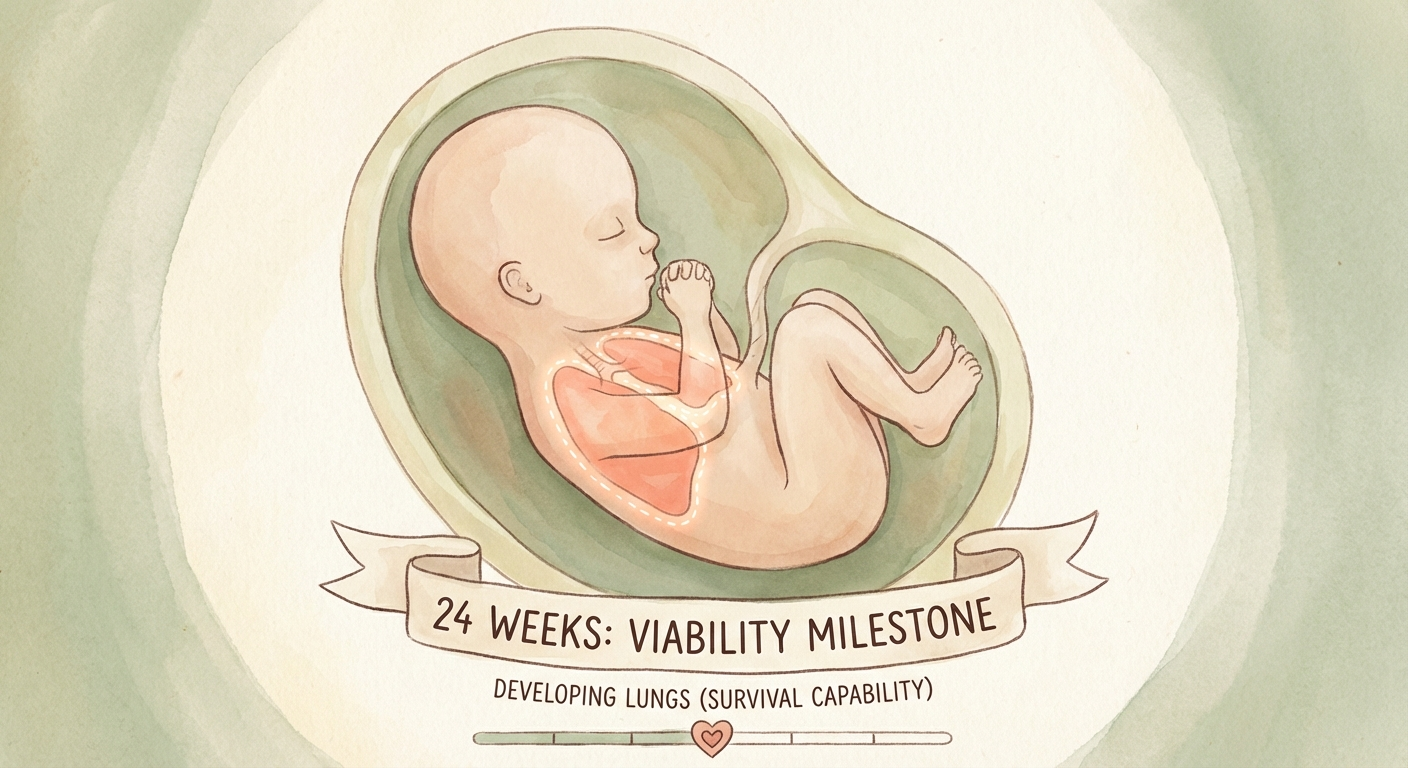
Significant milestones in maturation and viability characterize this week:
Viability milestone: Week 24 is generally considered the threshold of viability—the point at which a baby has a chance of survival if born prematurely. With advanced medical care in a neonatal intensive care unit (NICU), babies born at 24 weeks have survival rates of about 60-70%, though they face significant health challenges and long NICU stays.
Lung development: Lungs are developing rapidly but aren’t yet mature. Air sacs (alveoli) are forming, and surfactant production is increasing. Surfactant prevents lungs from collapsing and is essential for breathing. Lungs continue maturing throughout pregnancy and even after birth.
Brain development: Rapid brain growth continues:
- Brain waves show patterns of sleep and wakefulness
- Neurons are forming billions of connections
- Specialized areas for senses, movement, and thought are developing
- The brain is becoming more sophisticated and complex
Taste bud development: Taste buds are fully formed, and research shows babies can distinguish between sweet and bitter flavors in amniotic fluid.
Inner ear development: The inner ear is fully developed, giving your baby a sense of balance and spatial orientation. This may contribute to the somersaults and movements you feel.
Skin changes: Skin is still thin and wrinkled but becoming more opaque as fat accumulates. Blood vessels are less visible through the skin than in previous weeks.
Active movement: Movements are strong and frequent:
- Powerful kicks and punches
- Rolls and somersaults
- Hiccups (you can feel these)
- Grasping and touching
- Responding to sounds and touch
Eyelid separation: Eyelids, which have been fused shut, may begin separating this week or in the coming weeks, though they’ll remain closed most of the time.
Facial features: Your baby looks more like a newborn every day, with defined features, eyebrows, eyelashes, and even tiny tooth buds under the gums.
Fat accumulation: “Baby fat” is accumulating beneath the skin, helping with temperature regulation and energy storage. This will continue throughout the rest of pregnancy.
Bone marrow maturation: Bone marrow is fully responsible for producing blood cells, an important step toward independence.
Common Symptoms at 24 Weeks Pregnant
Week 24 typically marks the end of the easier second trimester, with some third-trimester symptoms beginning:
Very active baby: Movements are strong, frequent, and sometimes uncomfortable or visible from outside.
Large bump: Your bump is substantial and affecting balance, posture, and mobility.
Decreasing energy: Fatigue may start increasing as pregnancy progresses and your body works harder.
Shortness of breath: Worsening as your uterus pushes on your diaphragm.
Lower back and pelvic pain: Common and may worsen as pregnancy continues.
Heartburn and indigestion: Ongoing and often worsening.
Swollen feet and ankles: May increase, especially in warm weather or after activity.
Leg cramps: Common, especially at night.
Braxton Hicks contractions: May become more frequent as your body prepares for labor.
Frequent urination: Increasing as your uterus grows.
Difficulty sleeping: Finding comfortable sleeping positions may become challenging.
Skin changes: Stretch marks, linea nigra, darker areolas, possible melasma.
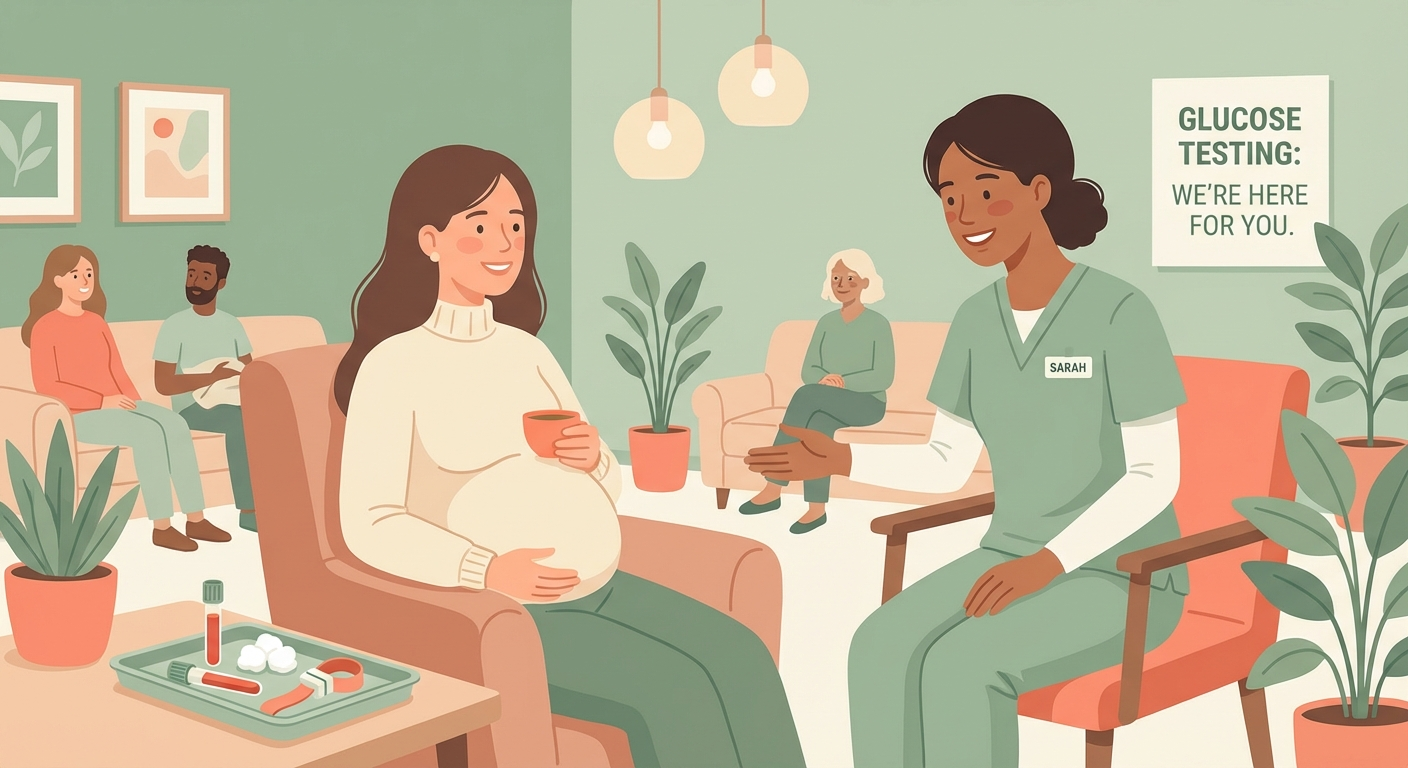
Glucose tolerance test: You’ll likely have this test around now to screen for gestational diabetes.
Weight gain: Rapid weight gain continues as baby grows and amniotic fluid increases.
When to Call Your Doctor
Contact your healthcare provider if you experience:
- Heavy bleeding
- Severe abdominal pain
- Regular, painful contractions
- Fever above 100.4°F (38°C)
- Sudden severe swelling
- Severe persistent headache with vision changes
- Significantly decreased fetal movement
- Leaking fluid (possible amniotic fluid leak)
- Burning or pain with urination
Tips for Week 24
Celebrate the viability milestone: Reaching 24 weeks is a significant achievement—your baby would have a fighting chance if born now, though staying pregnant as long as possible is still the goal.
Take your glucose tolerance test: Most providers screen for gestational diabetes between weeks 24-28. Follow instructions for fasting if required.
Continue healthy nutrition: Focus on nutrient-dense foods to support rapid brain and lung development.
Stay active: Continue regular, gentle exercise modified for your growing belly. Swimming and prenatal yoga are excellent choices.
Address increasing discomfort: Good posture, supportive shoes, pregnancy pillow for sleep, frequent position changes, and prenatal massage or chiropractic care.
Manage shortness of breath: Avoid overexertion, sleep propped up, practice good posture, take breaks.
Address swelling: Elevate feet regularly, stay hydrated, limit sodium, wear compression socks, avoid prolonged standing.
Prepare for third trimester: Stock up on larger, comfortable clothes; prepare for decreasing mobility; finalize major baby preparations.
Stay hydrated: Drink 8-10 glasses of water daily.
Sleep on your left side: Optimizes blood flow and reduces pressure on blood vessels.
Plan for maternity leave: Finalize details with your employer if you work.
Take childbirth classes: Complete classes before third trimester fatigue sets in.
Enjoy second trimester while it lasts: You have just a few more weeks of relative comfort before the third trimester begins.
Keep Your Pregnancy Organized with Nooko
Set your pregnancy using the first day of your last menstrual period or the due date from a dating scan to follow week-specific guidance and your due-date countdown. Use the journal for selected symptoms and private notes, save bump photos, manage checklists, reminders, and prenatal appointments, and share supported updates with an approved partner.
Nooko provides general information and recording tools, not medical advice or diagnosis. Some features require Nooko+.
Download Nooko on the App Store
References
- Mayo Clinic. (2024). “Fetal development: The 2nd trimester.” https://www.mayoclinic.org/healthy-lifestyle/pregnancy-week-by-week/in-depth/fetal-development/art-20046151
- Cleveland Clinic. (2025). “Fetal Development: Week-by-Week Stages of Pregnancy.” https://my.clevelandclinic.org/health/articles/7247-fetal-development-stages-of-growth
- American College of Obstetricians and Gynecologists. (2025). “Extremely Preterm Birth.” https://www.acog.org/womens-health/faqs/extremely-preterm-birth
Get Nooko Updates
Pregnancy tips and product updates, sent occasionally.
No spam. Privacy policy. Consumer health privacy. Unsubscribe anytime.
Ready to start tracking?
Download Nooko free — your pregnancy companion from week 1 to birth.