Week 3
Your baby is the size of a
Poppy Seed
< 1 mm
Length
< 1 g
Weight
3 Weeks Pregnant: Fertilization and the Journey to Implantation
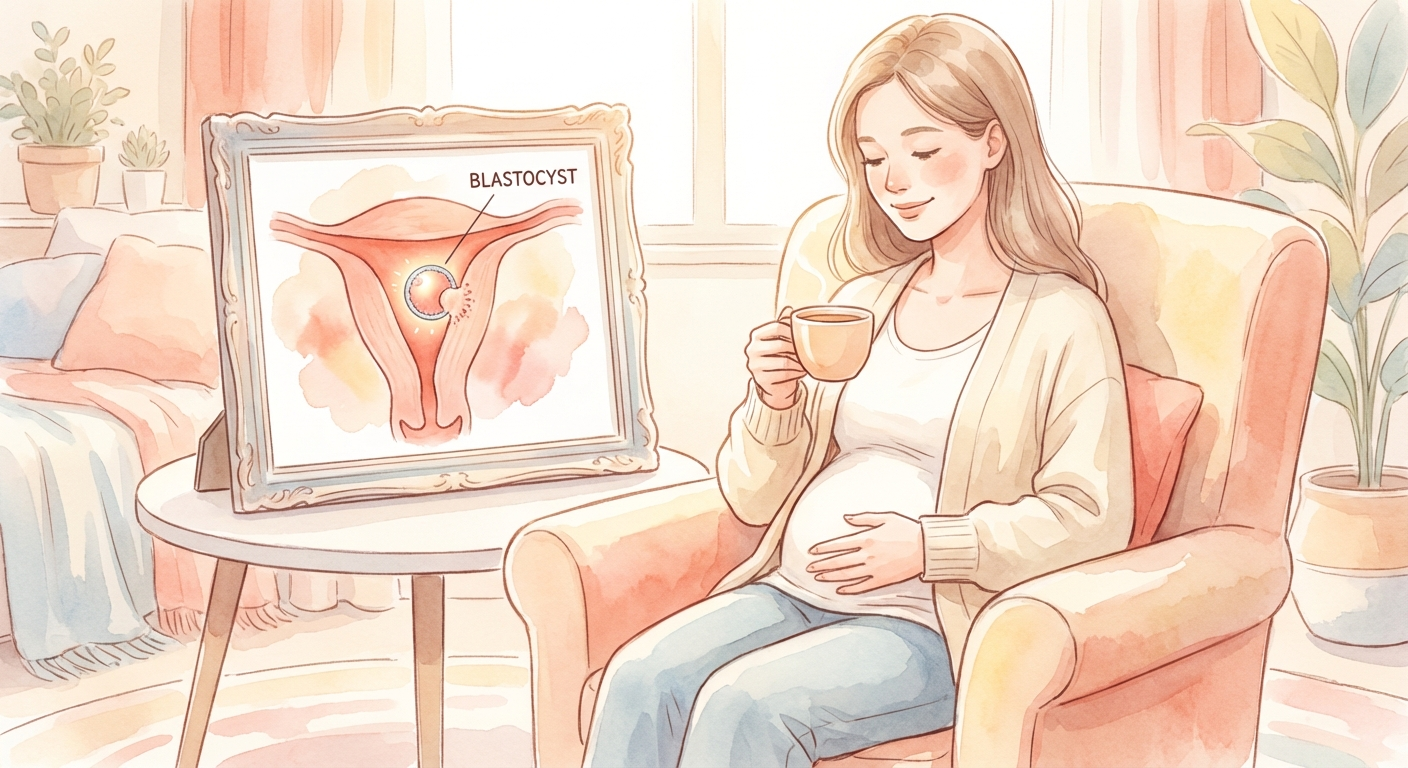
Week 3 of pregnancy is when the magic happens—conception. If sperm successfully fertilizes your egg this week, you’re officially pregnant, though you won’t know it yet. The fertilized egg (now called a zygote) begins rapidly dividing while traveling down your fallopian tube toward your uterus, transforming into a blastocyst that will soon implant.
What’s Happening at 3 Weeks Pregnant?
Week 3 is when fertilization occurs and early embryonic development begins. Here’s the remarkable journey that unfolds:
Fertilization: If you ovulated near the end of week 2 and sperm are present in your fallopian tube, fertilization typically occurs within 12-24 hours after ovulation. A single sperm penetrates the outer layer of the egg, and the genetic material from both parents combines to create a unique set of DNA—your baby’s complete genetic blueprint.
Once the sperm enters the egg, the egg’s membrane changes to prevent other sperm from entering. The fertilized egg is now called a zygote and contains 46 chromosomes—23 from each parent.
Rapid cell division begins: Within hours of fertilization, the zygote begins dividing through a process called cleavage. It divides into two cells, then four, then eight, and continues doubling. These cells are called blastomeres.
Journey through the fallopian tube: While dividing, the zygote travels down the fallopian tube toward the uterus. This journey takes about 3-4 days. The fallopian tube’s tiny hair-like structures (cilia) help propel the developing embryo along.
Morula stage: By day 3-4 after fertilization, the cluster of cells (now numbering around 16-32 cells) forms a solid ball called a morula (Latin for “mulberry,” which it resembles).
Blastocyst formation: Around day 5 after fertilization, the morula develops a fluid-filled cavity and becomes a blastocyst. The blastocyst has two distinct parts: the inner cell mass (which will become the embryo) and the outer layer called the trophoblast (which will become the placenta).
Arriving at the uterus: By the end of week 3 (approximately 5-6 days after fertilization), the blastocyst reaches the uterus. It “hatches” out of its protective outer shell (zona pellucida) in preparation for implantation.
Implantation begins: In the final days of week 3 or early week 4, the blastocyst begins burrowing into the nutrient-rich uterine lining. The outer cells of the blastocyst start secreting enzymes that break down the endometrial tissue, allowing the blastocyst to embed itself.
The Science of Fertilization
Fertilization is a precisely orchestrated process that occurs in the fallopian tube:
Sperm’s journey: Of the millions of sperm that enter the vagina, only a few hundred will reach the fallopian tube where the egg is waiting. The journey takes several hours, and many sperm don’t survive the acidic vaginal environment or get lost along the way.
Capacitation: As sperm travel through the female reproductive tract, they undergo capacitation—changes that enable them to penetrate the egg. Only capacitated sperm can fertilize an egg.
The race to the egg: Multiple sperm may reach the egg, but only one will successfully fertilize it. The egg is surrounded by a protective layer called the zona pellucida and a cluster of cells called the corona radiata.
Penetration: When a sperm successfully binds to the zona pellucida, it releases enzymes from its acrosome (cap-like structure) that help it burrow through. Once a sperm penetrates the zona pellucida and reaches the egg’s membrane, the two cells fuse.
Preventing polyspermy: The moment one sperm enters, the egg releases chemicals that harden the zona pellucida, preventing other sperm from entering. Fertilization by multiple sperm (polyspermy) would result in too many chromosomes and is not viable.
Genetic combination: The nuclei of the sperm and egg merge, combining 23 chromosomes from each parent to create a unique 46-chromosome human genome. Your baby’s sex is determined at this moment based on whether the sperm carries an X chromosome (female) or Y chromosome (male).
Early Cell Division and Development
The first few days after fertilization involve rapid and remarkable changes:
Day 1 (fertilization day): Single-cell zygote forms Day 2: 2-4 cells Day 3: 8-16 cells (morula stage begins) Day 4: 32+ cells (morula develops) Day 5: Blastocyst forms with inner cell mass and trophoblast Day 6-7: Blastocyst hatches and begins implantation
Throughout this time, the developing embryo is nourished by the yolk sac and nutrients within the cells themselves. It won’t receive nutrition directly from your bloodstream until implantation is complete.
What You Might Be Feeling at Week 3
During week 3, you typically won’t know you’re pregnant yet. Most pregnancy symptoms don’t appear until after implantation is complete and your body starts producing significant amounts of hCG (pregnancy hormone), which happens in week 4.
However, some people report subtle sensations around the time of conception or implantation, though these are not reliable indicators:
Mild cramping: Some people experience light cramping around ovulation or during early implantation, though this is often indistinguishable from normal mid-cycle sensations.
Implantation spotting: A small percentage of people notice light spotting 6-12 days after ovulation when the blastocyst implants. This is typically very light—just a few drops of pinkish or brownish discharge.
No symptoms: Most people feel completely normal during week 3. The absence of symptoms doesn’t mean anything is wrong—it simply means implantation hormones haven’t yet reached detectable levels.
Can You Test for Pregnancy at Week 3?
At week 3, it’s too early for a pregnancy test to be accurate. Home pregnancy tests detect the hormone hCG, which is only produced after implantation begins. Since implantation typically starts late in week 3 or early in week 4, hCG levels aren’t high enough to detect until around the time of your expected period (week 4) or shortly after.
Testing too early often leads to false negatives, which can be emotionally difficult if you’re trying to conceive. For the most accurate results, wait until at least the first day of your missed period (around the end of week 4 or beginning of week 5).
Supporting Early Development
Even though you likely don’t know you’re pregnant yet, healthy habits during week 3 support the developing blastocyst:
Continue prenatal vitamins: Keep taking your prenatal vitamin with at least 400-800 mcg of folic acid. Neural tube development begins just a few weeks after conception.
Avoid alcohol: The first few weeks after conception are a critical period of development. Avoid alcohol completely if you’re trying to conceive or think you might be pregnant.
Eat a balanced diet: Focus on nutrient-dense whole foods with plenty of fruits, vegetables, whole grains, and lean proteins.
Avoid harmful substances: Stay away from smoking, recreational drugs, and unnecessary medications. Check with your healthcare provider about the safety of any prescription medications.
Limit caffeine: Keep caffeine intake under 200 mg per day (about one 12-ounce cup of coffee).
Maintain healthy habits: Continue exercising moderately, getting adequate sleep, and managing stress.
Be patient: The two-week wait between ovulation and when you can reliably test for pregnancy can be emotionally challenging. Be kind to yourself during this time.
What Happens Next?
As week 3 ends and week 4 begins, implantation continues. The trophoblast cells burrow deeper into the uterine lining and begin forming the early placenta. These cells start producing hCG, which signals your ovaries to keep producing progesterone and prevents your period.
By the end of week 4, hCG levels will be high enough to detect on a home pregnancy test, and you may begin experiencing early pregnancy symptoms like breast tenderness, fatigue, or mild nausea.
When to Seek Medical Advice
If you’re trying to conceive: Continue healthy habits and wait to test until at least the first day of your expected period for the most accurate results.
If you experience severe pain: Sharp or severe abdominal or pelvic pain could indicate an ectopic pregnancy (when the embryo implants outside the uterus, typically in a fallopian tube). This is a medical emergency. Seek immediate care if you experience severe one-sided pain along with dizziness, shoulder pain, or heavy bleeding.
If you have risk factors: If you have a history of ectopic pregnancy, pelvic inflammatory disease, or endometriosis, talk to your healthcare provider early in your conception journey.
Use Nooko Once You’re Expecting
Nooko is a pregnancy tracker, not a cycle or fertility predictor. Once you know you’re expecting, set your pregnancy using the first day of your last menstrual period or the due date from a dating scan to see week-specific guidance and a due-date countdown.
Use the journal, checklists, reminders, bump-photo diary, and partner sharing to keep your pregnancy organized. Nooko provides general information and recording tools, not medical advice or diagnosis. Some features require Nooko+.
Download Nooko on the App Store
References
- Cleveland Clinic. (2023). “Conception: Fertilization, Process & When It Happens.” https://my.clevelandclinic.org/health/articles/11585-conception
- American College of Obstetricians and Gynecologists. (2025). “How Your Fetus Grows During Pregnancy.” https://www.acog.org/womens-health/faqs/how-your-fetus-grows-during-pregnancy
- Moore KL, Persaud TVN, Torchia MG. (2025). “The Developing Human: Clinically Oriented Embryology.” 12th ed. Elsevier.
- Cleveland Clinic. (2025). “Fetal Development: Week-by-Week Stages of Pregnancy.” https://my.clevelandclinic.org/health/articles/7247-fetal-development-stages-of-growth
- The Bump. (2024). “When Does Implantation Occur? Symptoms and Timeline.” https://www.thebump.com/a/when-does-implantation-occur
- American Society for Reproductive Medicine. (2024). “Optimizing natural fertility: a committee opinion.” Fertility and Sterility, 100(3), 631-637.
- Cleveland Clinic. (2023). “Conception: Fertilization, Process & When It Happens.”
- National Human Genome Research Institute. (2024). “Sex Chromosomes.” https://www.genome.gov/genetics-glossary/Sex-Chromosome
- Moore KL, Persaud TVN, Torchia MG. (2025). “The Developing Human: Clinically Oriented Embryology.” 12th ed.
- What to Expect. (2025). “When Does Implantation Occur? Symptoms, What to Expect.” https://www.whattoexpect.com/getting-pregnant/ovulation/implantation/
- BabyCenter. (2025). “When does implantation occur?” https://www.babycenter.com/getting-pregnant/how-to-get-pregnant/when-does-implantation-occur_41001244
- Centers for Disease Control and Prevention. (2025). “Folic Acid Recommendations.” https://www.cdc.gov/ncbddd/folicacid/recommendations.html
- American College of Obstetricians and Gynecologists. “Moderate Caffeine Consumption During Pregnancy.” Committee Opinion No. 462.
- American College of Obstetricians and Gynecologists. (2024). “Ectopic Pregnancy.” https://www.acog.org/womens-health/faqs/ectopic-pregnancy
Get Nooko Updates
Pregnancy tips and product updates, sent occasionally.
No spam. Privacy policy. Consumer health privacy. Unsubscribe anytime.
Ready to start tracking?
Download Nooko free — your pregnancy companion from week 1 to birth.