Exercise During Pregnancy: A Safe, Trimester-by-Trimester Guide
Discover safe exercises during pregnancy, what to avoid, and how to stay active in every trimester. Evidence-based guidance from ACOG and leading health organisations.
By Nooko Team
Staying active during pregnancy isn’t just safe — for most people, it’s strongly recommended. Regular physical activity can ease common discomforts, boost your mood, improve sleep, and even help prepare your body for labour and recovery.
But it’s completely normal to feel uncertain. Which exercises are safe? What should you avoid? And how does your routine need to change as your body changes?
This guide walks you through the evidence, trimester by trimester, so you can move with confidence throughout your pregnancy.
Why Exercise During Pregnancy Matters
The American College of Obstetricians and Gynecologists (ACOG) recommends that pregnant individuals without complications get at least 150 minutes of moderate-intensity aerobic activity per week — that’s about 30 minutes on most days (ACOG, 2020).
The benefits are well-documented:
- Reduced risk of gestational diabetes. A meta-analysis in Diabetes Care found that regular exercise during pregnancy reduced the risk of gestational diabetes by approximately 30% (Tobias et al., 2011).
- Lower rates of preeclampsia. Physical activity is associated with a reduced risk of preeclampsia, particularly when started early in pregnancy (Aune et al., 2014, BMJ).
- Better mood and reduced anxiety. Exercise stimulates endorphin release and has been shown to reduce symptoms of prenatal depression and anxiety (Davenport et al., 2018, British Journal of Sports Medicine).
- Improved sleep quality. Moderate exercise can help with the insomnia that many pregnant people experience, particularly in the second and third trimesters.
- Shorter labour and faster recovery. Regular exercisers tend to have shorter active labour phases and recover more quickly postpartum (Barakat et al., 2018, European Journal of Obstetrics & Gynecology).
- Healthier weight gain. Staying active helps manage weight gain within recommended ranges, reducing risks for both parent and baby.
Before You Begin: Important Safety Notes
Before starting or continuing any exercise programme during pregnancy, keep these principles in mind:
- Talk to your healthcare provider. This is especially important if you have any pregnancy complications, a history of preterm labour, cervical insufficiency, placenta praevia, or preeclampsia.
- Listen to your body. Pregnancy is not the time to push through pain or exhaustion. If something doesn’t feel right, stop.
- Stay hydrated. Your blood volume increases significantly during pregnancy, and dehydration can trigger contractions. Drink water before, during, and after exercise.
- Avoid overheating. Exercise in well-ventilated spaces, wear breathable clothing, and avoid hot yoga or exercising outdoors in extreme heat. Core temperature above 39°C (102.2°F) may pose risks, particularly in the first trimester (Ravanelli et al., 2019, British Journal of Sports Medicine).
- Know when to stop. ACOG advises stopping exercise and contacting your provider if you experience vaginal bleeding, dizziness, headache, chest pain, calf pain or swelling, amniotic fluid leakage, regular contractions, or shortness of breath before starting exercise.
Who Should Avoid Exercise During Pregnancy?
ACOG identifies several absolute contraindications, including:
- Haemodynamically significant heart disease
- Restrictive lung disease
- Cervical insufficiency or cerclage
- Placenta praevia after 26 weeks
- Preterm labour in the current pregnancy
- Ruptured membranes
- Preeclampsia or pregnancy-induced hypertension
- Severe anaemia
If any of these apply to you, your provider will help you determine what level of activity, if any, is appropriate (ACOG, 2020).
First Trimester (Weeks 1–13): Building a Foundation
What’s Happening in Your Body
During the first trimester, fatigue and nausea are common. Your body is producing significantly more progesterone, which can leave you feeling exhausted. You might not feel like exercising at all — and that’s okay.
Safe Exercises
If you were active before pregnancy, you can generally continue your routine with some modifications. If you’re starting fresh, begin gently.
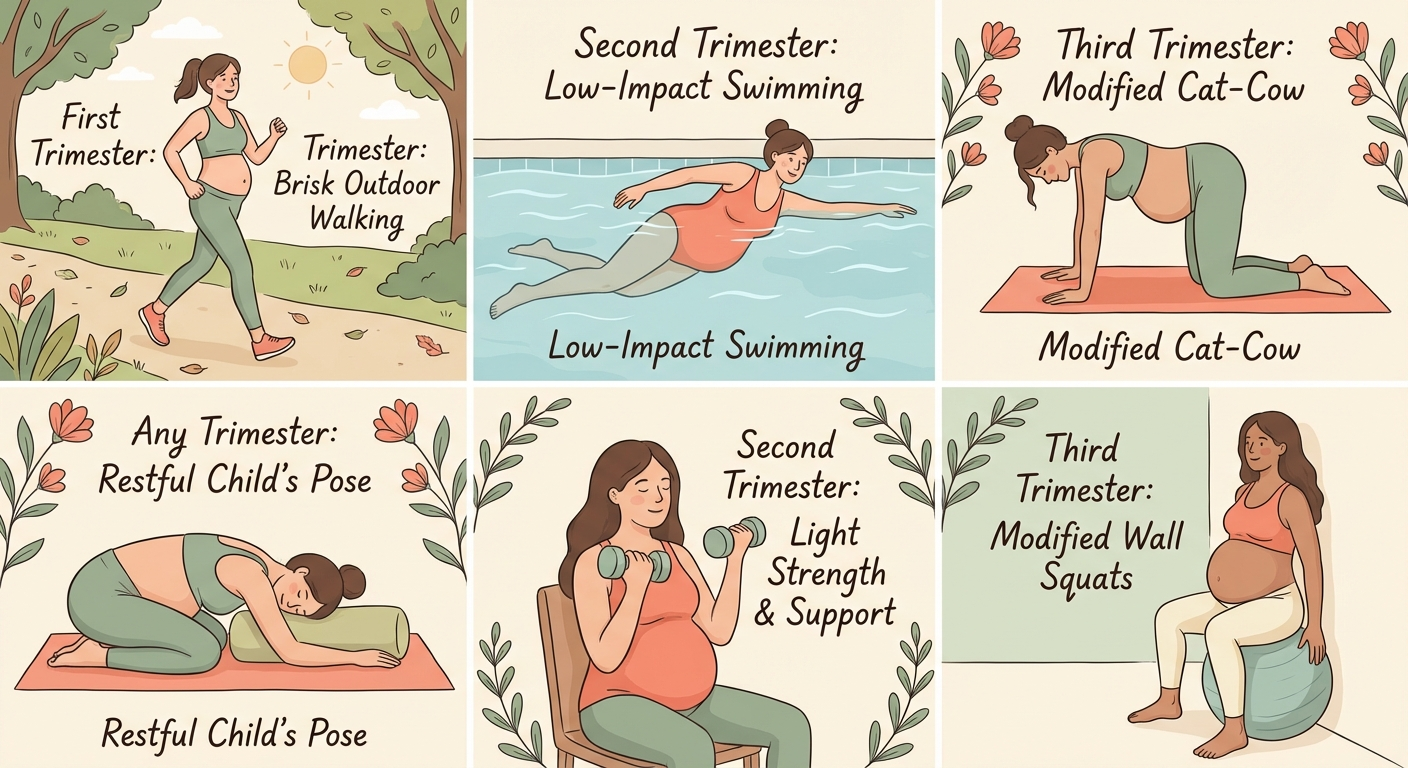
- Walking. The simplest and most accessible form of exercise. Even 15–20 minutes daily makes a difference.
- Swimming and water aerobics. The water supports your body weight and keeps you cool. Swimming is one of the safest exercises throughout all of pregnancy.
- Prenatal yoga. Helps with flexibility, balance, and stress reduction. Look for classes specifically designed for pregnancy — they avoid poses that involve lying flat on your back for extended periods or deep twisting.
- Light strength training. Maintaining muscle tone with moderate weights and higher repetitions is safe for most people. Focus on form over heavy loads.
- Stationary cycling. Lower risk of falls compared to outdoor cycling, and easy to control intensity.
Tips for the First Trimester
- Don’t force it on high-nausea days. A short walk may be all you manage, and that’s enough.
- Focus on establishing a sustainable habit rather than intensity.
- Avoid exercises with a high fall risk (skiing, horseback riding, mountain biking).
- Skip contact sports (football, basketball, martial arts).
Second Trimester (Weeks 14–27): The Sweet Spot
What’s Happening in Your Body
Many people find the second trimester the most comfortable for exercise. Nausea often subsides, energy returns, and your bump is present but not yet unwieldy. However, your centre of gravity is shifting, and the hormone relaxin is loosening your joints and ligaments.
Safe Exercises
- Brisk walking or hiking. Increase your pace and distance if it feels comfortable. Stick to even terrain to reduce fall risk.
- Swimming. Continues to be excellent. Many people find it increasingly comfortable as buoyancy offsets the growing belly.
- Prenatal Pilates. Strengthens your core and pelvic floor — both crucial for supporting your growing uterus and preparing for labour. Ensure your instructor is trained in prenatal modifications.
- Modified strength training. Continue with moderate weights. Begin avoiding exercises that involve lying flat on your back for extended periods, as the uterus can compress the inferior vena cava, potentially reducing blood flow (ACOG, 2020).
- Low-impact aerobics. Group fitness classes designed for pregnancy can be motivating and social.
- Dancing. Gentle dancing is a great mood booster. Avoid jumps, spins, and sudden direction changes.
Key Modifications
- No supine exercises after about 16–20 weeks. Use an incline bench or side-lying positions instead.
- Widen your stance. As your belly grows, a wider base of support helps with balance.
- Reduce range of motion on stretches. Relaxin makes your joints more flexible than usual, increasing the risk of overstretching and injury.
- Avoid the Valsalva manoeuvre (holding your breath during exertion). Exhale on effort.
Third Trimester (Weeks 28–40): Staying Comfortable and Prepared
What’s Happening in Your Body
Your baby is growing rapidly, your lungs have less room to expand, and your joints are at their most relaxed. Shortness of breath, back pain, and pelvic pressure are common. Exercise may feel harder — because it genuinely is.
Safe Exercises
- Walking. Remains the gold standard. Shorter, more frequent walks may feel better than longer sessions.
- Swimming and water walking. The buoyancy is a genuine relief in the third trimester. Many people describe it as the only time they feel “weightless.”
- Prenatal yoga. Focus on gentle stretching, breathing techniques, and relaxation — all valuable preparation for labour.
- Pelvic floor exercises (Kegels). Strengthening the pelvic floor can help with bladder control and may aid in recovery after delivery (Woodley et al., 2020, Cochrane Database of Systematic Reviews).
- Gentle stretching and mobility work. Focus on hips, lower back, and shoulders.
- Stationary cycling. Recumbent bikes may be more comfortable as your belly grows.
What to Scale Back
- Reduce intensity. Use the “talk test” — you should be able to carry on a conversation while exercising.
- Shorten sessions if needed. Two 15-minute walks are just as beneficial as one 30-minute walk.
- Avoid any exercise with fall or impact risk.
- Stop if you experience pelvic pain, Braxton Hicks contractions that don’t subside with rest, or any warning signs listed above.
Exercises to Avoid Throughout Pregnancy
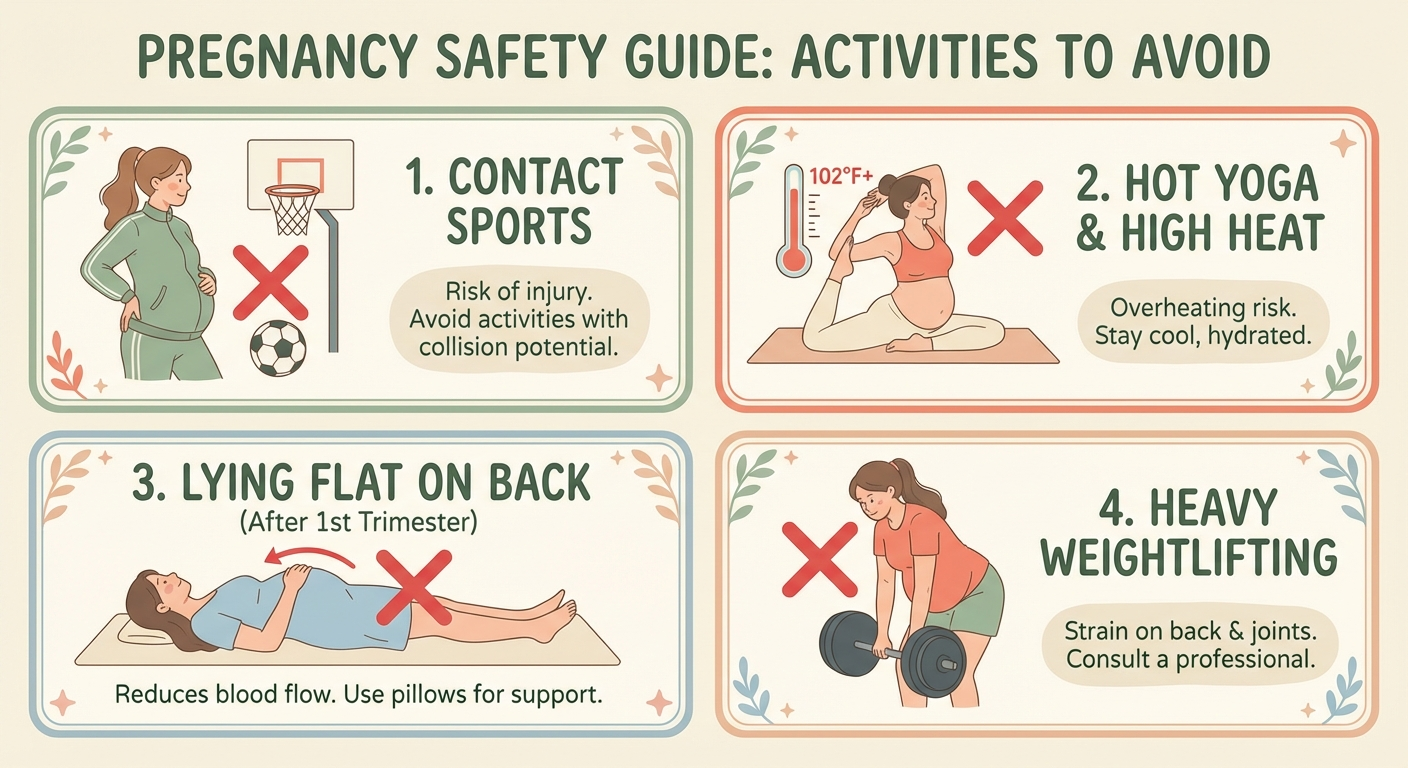
Regardless of trimester, certain activities carry risks that outweigh their benefits:
| Avoid | Why |
|---|---|
| Contact sports (rugby, football, boxing) | Risk of abdominal trauma |
| Hot yoga or hot Pilates | Risk of overheating |
| Scuba diving | Risk of decompression sickness to the foetus |
| Activities with high fall risk (skiing, surfing, gymnastics) | Risk of abdominal injury |
| Heavy weightlifting / maximal effort lifts | Excessive strain, Valsalva risk |
| High-altitude exercise (above 2,500m) without acclimatisation | Risk of altitude sickness and reduced oxygen |
| Supine exercises after ~20 weeks | Vena cava compression |
Pelvic Floor: The Exercise You Can’t Skip
Pelvic floor exercises deserve special mention. Your pelvic floor supports your bladder, uterus, and bowel, and pregnancy places enormous demands on these muscles.
How to do a Kegel:
- Identify your pelvic floor muscles (the ones you’d use to stop the flow of urine — though don’t practise while actually urinating).
- Contract and hold for 5–10 seconds.
- Release slowly.
- Repeat 10–15 times, three times per day.
A Cochrane review found that antenatal pelvic floor muscle training reduced the risk of urinary incontinence in late pregnancy and postpartum (Woodley et al., 2020). If you’re unsure about your technique, a pelvic floor physiotherapist can help.
Staying Motivated: Practical Tips
- Find what you enjoy. You’re far more likely to stick with exercise that feels good. If you hate running, don’t run — walk, swim, or dance instead.
- Buddy up. Exercising with a friend or joining a prenatal class adds accountability and social connection.
- Set realistic goals. Some days you’ll feel great; others, a gentle stretch is a win. Both count.
- Track how you feel, not just what you did. Notice the mood boost, the better sleep, the reduced back pain. These are your real metrics.
- Invest in good support. A supportive sports bra and comfortable shoes make a real difference as your body changes.
When to Call Your Provider
Contact your midwife, obstetrician, or healthcare provider if you experience any of the following during or after exercise:
- Vaginal bleeding or fluid leakage
- Regular, painful contractions
- Dizziness or feeling faint
- Chest pain or heart palpitations
- Severe headache
- Calf pain or swelling (possible sign of deep vein thrombosis)
- Decreased foetal movement
- Sudden swelling of face, hands, or feet
The Bottom Line
Exercise during pregnancy is one of the best things you can do for yourself and your baby. It doesn’t need to be intense or complicated — consistency and enjoyment matter more than performance. Start where you are, listen to your body, and adjust as you go.
Your body is doing extraordinary work. Moving it — gently, joyfully, safely — supports that work beautifully.
References
- ACOG. (2020). Physical Activity and Exercise During Pregnancy and the Postpartum Period. Committee Opinion No. 804. Obstetrics & Gynecology, 135(4), e178–e188. https://doi.org/10.1097/AOG.0000000000003772
- Aune, D., et al. (2014). Physical activity and the risk of preeclampsia: a systematic review and meta-analysis. BMJ, 348, g3119. https://doi.org/10.1136/bmj.g3119
- Barakat, R., et al. (2018). Exercise during pregnancy and the risk of preterm birth. European Journal of Obstetrics & Gynecology and Reproductive Biology, 229, 68–72.
- Davenport, M.H., et al. (2018). Exercise for the prevention and treatment of low back, pelvic girdle and lumbopelvic pain during pregnancy. British Journal of Sports Medicine, 52(21), 1339–1346.
- Ravanelli, N., et al. (2019). Thermoregulation during pregnancy and exercise. British Journal of Sports Medicine, 53(12), 799–805.
- Tobias, D.K., et al. (2011). Physical activity before and during pregnancy and risk of gestational diabetes mellitus. Diabetes Care, 34(1), 223–229.
- Woodley, S.J., et al. (2020). Pelvic floor muscle training for prevention and treatment of urinary and faecal incontinence in antenatal and postnatal women. Cochrane Database of Systematic Reviews, 5, CD007471.
Ready to track your pregnancy?
Use Nooko to follow each week, keep pregnancy tools together, and share supported updates with your partner.
Download FreeGet Nooko Updates
Pregnancy tips and product updates, sent occasionally.
No spam. Privacy policy. Consumer health privacy. Unsubscribe anytime.