Pregnancy-Safe Fish: Low Mercury Options
Fish provides essential omega-3s for baby's brain development. Learn which fish are safe during pregnancy including salmon, sardines, and cod, plus mercury levels and serving sizes.
By Nooko Team
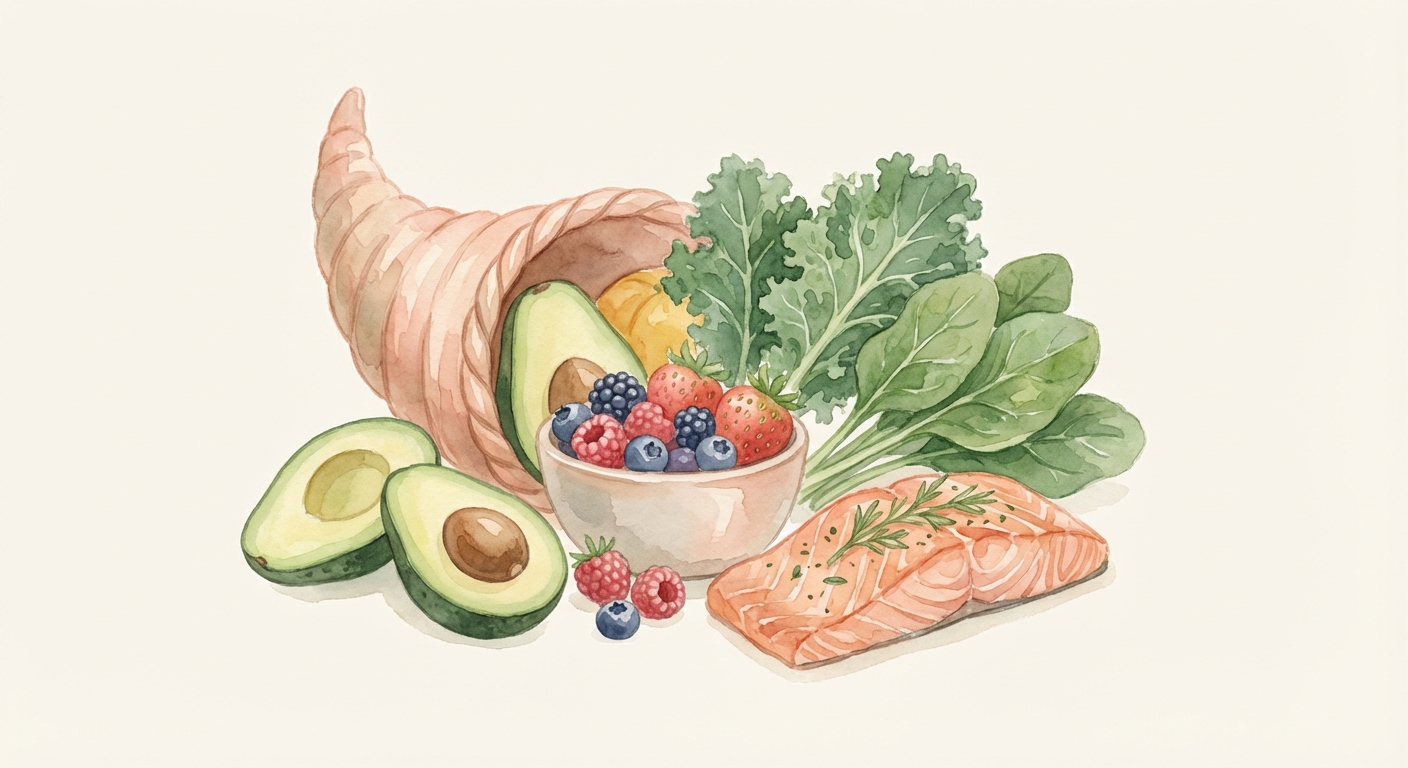
Fish is one of the best sources of DHA and EPA (omega-3 fatty acids) essential for your baby’s brain and eye development. Safe, low-mercury options include salmon, sardines, anchovies, herring, cod, tilapia, catfish, and shrimp. Aim for 8-12 ounces (2-3 servings) per week. Completely avoid high-mercury fish like shark, swordfish, king mackerel, and tilefish. Limit albacore tuna to 6 ounces per week.1
Why Fish is Important During Pregnancy
Omega-3 fatty acids (DHA and EPA): Essential for fetal brain, eye, and nervous system development. Research shows babies born to mothers who ate adequate fish during pregnancy have better cognitive outcomes.2
High-quality protein: Essential for fetal growth and development.
Vitamin D: Important for bone development and immune function.
Other nutrients: Selenium, vitamin B12, iron.
Best Fish Choices (Lowest Mercury)
Eat 2-3 servings (8-12 oz total) per week from this list:3
Salmon (wild or farmed)
- Very low mercury
- High in omega-3s
- One of the best choices
Sardines
- Extremely low mercury
- Very high in omega-3s and calcium
- Sustainable choice
Anchovies
- Very low mercury
- High in omega-3s
- Often found in Caesar dressing (if pasteurized)
Herring
- Low mercury
- Excellent source of omega-3s
Cod (Atlantic or Pacific)
- Low mercury
- Mild flavor, easy to prepare
Tilapia
- Low mercury
- Mild, versatile
Catfish
- Low mercury
- Good protein source
Shrimp
- Very low mercury
- Most consumed seafood in the US
Pollock
- Low mercury
- Often used in fish sticks and fast-food fish sandwiches
Light canned tuna (skipjack)
- Lower in mercury than albacore
- Limit to 12 oz per week4
Trout (freshwater)
- Low mercury
- High in omega-3s
Flounder/Sole
- Low mercury
- Mild, delicate flavor
Good Choices (Low to Moderate Mercury)
Limit to 1 serving (6 oz) per week:
Albacore (“white”) tuna
- Higher mercury than light tuna
- Still safe in limited amounts
Mahi mahi
- Moderate mercury
- Good protein source
Snapper
- Some varieties have moderate mercury
Halibut
- Can have moderate mercury depending on type
Fish to Completely Avoid (High Mercury)
Never eat during pregnancy:5
Shark Swordfish King mackerel Tilefish (Gulf of Mexico) Bigeye tuna Marlin Orange roughy
These fish live longer and are higher on the food chain, accumulating dangerous levels of mercury.
Understanding Mercury Risk
What is mercury? A heavy metal found in water that accumulates in fish. High levels can damage your baby’s developing brain and nervous system.
How mercury accumulates: Larger, longer-lived predatory fish accumulate more mercury from eating smaller fish.
Why pregnancy matters: Fetal brains and nervous systems are especially vulnerable to mercury damage.
Long-term effects: Excessive mercury exposure during pregnancy can lead to developmental delays, learning difficulties, and problems with memory, attention, and language skills.
Omega-3 Supplements vs. Fish
Fish is best: Provides DHA/EPA plus protein, vitamin D, and other nutrients.
If you don’t eat fish: Consider a prenatal DHA supplement (usually derived from algae). Aim for 200-300 mg DHA daily.6
Fish oil supplements: Generally safe, but choose high-quality brands tested for purity and mercury content.
Cod liver oil: Avoid—contains high levels of vitamin A that can harm fetal development.
Safe Fish Preparation
Cook thoroughly: Fish should reach 145°F internal temperature. Flesh should be opaque and separate easily with a fork.
Avoid raw fish: No sushi with raw fish, sashimi, ceviche, or poke during pregnancy.
Refrigerate properly: Fresh fish should be refrigerated immediately and eaten within 1-2 days.
Frozen fish: A safe, affordable option. Nutritionally similar to fresh.
Smoked fish: Avoid refrigerated smoked fish unless cooked in a dish to 165°F. Shelf-stable (canned) smoked fish is safe.
Local Fish and Advisories
Check local advisories: If eating fish caught in local waters, check state/local advisories about contamination. Many states have specific warnings about certain lakes or rivers.7
Recreational fishing: Limit consumption of self-caught freshwater fish to 6 oz per week and don’t eat any other fish that week.
Mercury varies: Levels can vary by location even for the same species.
Sample Weekly Fish Plan
Monday: 4 oz grilled salmon Wednesday: Sardines on whole grain crackers (3 oz) Friday: Shrimp stir-fry (4 oz)
Total: 11 oz per week—right in the recommended range!
Keep Pregnancy Notes with Nooko
Nooko provides week-by-week guidance and a journal for notes you choose to keep. It does not calculate fish, omega-3, or mercury intake and does not provide personalized nutrition recommendations; use the guidance of your healthcare professional and relevant food-safety authority.
Download Nooko on the App Store
References
Footnotes
-
FDA & EPA. (2021). “Eating Fish: What Pregnant Women and Parents Should Know.” https://www.fda.gov/food/consumers/eating-fish-what-pregnant-women-and-parents-should-know ↩
-
Hibbeln JR, et al. (2007). “Maternal seafood consumption in pregnancy and neurodevelopmental outcomes in childhood.” Lancet, 369(9561), 578-585. ↩
-
FDA & EPA. (2021). “Eating Fish: What Pregnant Women and Parents Should Know.” ↩
-
FDA & EPA. (2021). “Eating Fish: What Pregnant Women and Parents Should Know.” ↩
-
FDA & EPA. (2021). “Eating Fish: What Pregnant Women and Parents Should Know.” ↩
-
American College of Obstetricians and Gynecologists. (2026). “Healthy Eating During Pregnancy.” https://www.acog.org/womens-health/faqs/healthy-eating-during-pregnancy ↩
-
EPA. (2025). “Support for Fish and Shellfish Advisory Programs.” https://www.epa.gov/choose-fish-and-shellfish-wisely/support-fish-and-shellfish-advisory-programs ↩
Ready to track your pregnancy?
Use Nooko to follow each week, keep pregnancy tools together, and share supported updates with your partner.
Download FreeGet Nooko Updates
Pregnancy tips and product updates, sent occasionally.
No spam. Privacy policy. Consumer health privacy. Unsubscribe anytime.