Week 10
Your baby is the size of a
Strawberry
3.1 cm
Length
4 g
Weight
10 Weeks Pregnant: Vital Organs Are Functioning
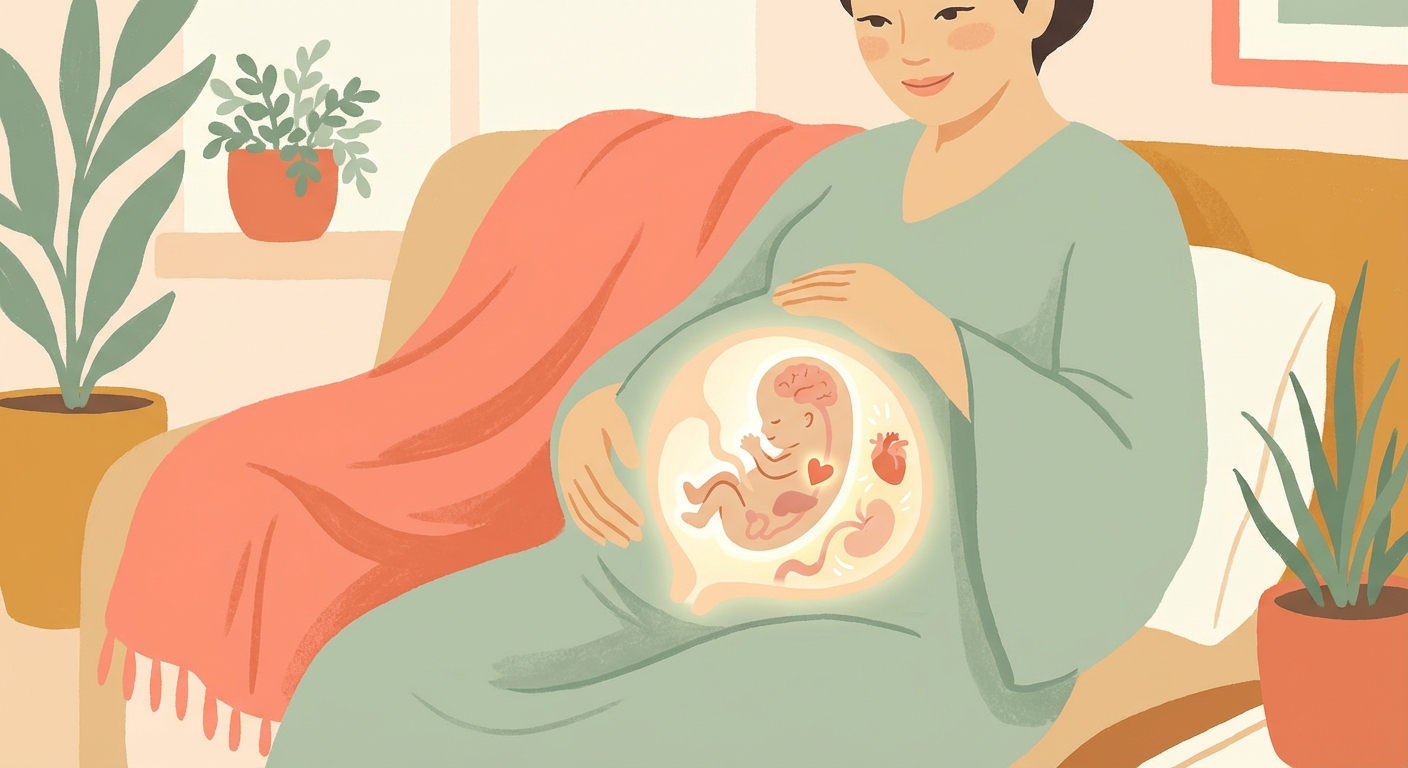
At 10 weeks pregnant, your baby is about the size of a strawberry (approximately 31-42 mm or 1.2-1.7 inches). All vital organs have formed and are beginning to function. Your baby is swallowing amniotic fluid and producing urine, practicing for life outside the womb.
What’s Happening at 10 Weeks Pregnant?
Week 10 marks the beginning of the fetal period in earnest. The critical period of organogenesis (organ formation) is complete, and the risk of major birth defects from environmental factors decreases significantly. From now through birth, your baby will primarily grow in size and refine the structures already in place.
Your baby is looking increasingly human, with distinct features and proportions that are becoming more balanced. Bones are hardening, joints are working, and your baby is making frequent movements inside the amniotic sac—practicing all the reflexes needed after birth.
For you, this week may still bring intense pregnancy symptoms, but many people notice symptoms beginning to ease in the coming weeks as hormone levels start to plateau.
How Big is My Baby at 10 Weeks?
Your baby at 10 weeks is about the size of a strawberry or prune, measuring approximately 31-42 millimeters (1.2-1.7 inches) from crown to rump and weighing about 4-5 grams (0.14-0.18 ounces).
Your baby has grown significantly—about 10-15 millimeters since last week alone. The head is still proportionally large (about half the total body length), but the body is rapidly catching up.
Baby Development at Week 10
Remarkable refinement and functional milestones mark this week:
Vital organs functioning: All essential organs are not only formed but beginning to function:
- Heart: Beating strongly at 140-170 beats per minute, pumping blood through the body
- Kidneys: Producing small amounts of urine, which is released into the amniotic fluid
- Liver: Producing bile and blood cells
- Intestines: Positioned in the abdomen (no longer in the umbilical cord)
- Stomach: Producing digestive juices
- Brain: Producing about 250,000 neurons every minute
Swallowing and practicing: Your baby is swallowing small amounts of amniotic fluid and urinating it back out—practicing digestive and excretory functions. This cycle helps develop the digestive system and kidneys.
Bone development: Bones are hardening (ossifying) from cartilage, giving your baby’s skeleton more structure. The skeleton provides a framework for muscles to develop strength.
Distinct fingers and toes: Fingers and toes are completely separated, and tiny fingernails and toenails are forming at the tips.
Facial development: Your baby’s face is well-defined with:
- Eyes positioned properly (no longer on the sides of the head)
- Fully formed eyelids (fused shut until around week 28)
- Ears moving to their correct position on the sides of the head
- Upper lip completely formed
- Tooth buds for all 20 baby teeth present
- Tongue with functioning taste buds
Movement: Your baby is incredibly active, making jerky movements, flexing limbs, hiccuping, and even yawning—though you still can’t feel these motions. These movements are essential for muscle and joint development.
Reproductive organs: If you’re having a boy, testosterone production is underway. If you’re having a girl, ovaries are forming. Internal reproductive organs are developing, though external genitalia aren’t yet clearly differentiated on ultrasound.
Hair and nails: Fine hair (lanugo) may begin forming, and nail beds are developing.
Skin: Your baby’s skin is still translucent, with visible blood vessels underneath.
Placenta: The placenta is fully functional, handling all hormone production, nutrient transfer, and waste removal.
Common Symptoms at 10 Weeks Pregnant
Week 10 symptoms are often similar to previous weeks, though some people notice symptoms beginning to ease:
Morning sickness: Nausea may still be intense for some, while others notice it beginning to improve. Symptoms typically peak around weeks 9-10.
Fatigue: You may still feel exhausted, needing extra sleep and rest throughout the day.
Frequent urination: Your uterus is about the size of a grapefruit and putting pressure on your bladder.
Breast changes: Breasts may be noticeably larger, tender, and heavier. Veins may be more prominent.
Food aversions and cravings: You may have strong preferences for or against certain foods.
Increased vaginal discharge: Thin, milky discharge is normal and protects against infection.
Mood swings: Hormonal fluctuations can cause emotional ups and downs.
Visible veins: Increased blood volume (up to 40-50% more than pre-pregnancy) makes veins more visible, especially on breasts and legs.
Slight weight gain: Most people have gained 1-5 pounds by this point, though some lose weight due to morning sickness. Both are normal.
Bloating and constipation: Progesterone continues slowing digestion.
Headaches: Hormonal changes and increased blood volume can trigger headaches.
Emotional changes: Anxiety about pregnancy, excitement, worry—all are normal as you process this major life change.
When to Call Your Doctor
Seek medical attention if you experience:
- Heavy bleeding or passing clots
- Severe abdominal pain
- Severe, persistent vomiting with dehydration
- Fever above 100.4°F (38°C)
- Sudden severe headache or vision changes
- Burning with urination
Tips for Week 10
Prepare for prenatal screening: Discuss with your healthcare provider whether you want prenatal genetic screening tests (typically offered weeks 10-13) such as NIPT (non-invasive prenatal testing) or NT ultrasound.
Start thinking about announcements: Many people wait until after the first trimester to announce their pregnancy publicly. Consider when and how you’d like to share your news.
Manage headaches naturally: Try rest, hydration, cold compresses, and stress reduction. Check with your provider before taking any medications.
Address constipation: Increase fiber intake, drink plenty of water, exercise gently, and ask your doctor about safe stool softeners if needed.
Support your changing body: Invest in comfortable bras, elastic-waist pants, and flowy tops as your body changes.
Continue prenatal vitamins: Make sure you’re getting adequate folic acid, iron, and other essential nutrients.
Stay active if possible: Gentle exercise like walking, swimming, or prenatal yoga can boost energy and mood—if you feel up to it.
Rest when needed: Don’t fight fatigue. Your body is doing incredible work.
Stay hydrated: Aim for 8-10 glasses of water daily to support increased blood volume and prevent constipation.
Connect with your support system: Share how you’re feeling with your partner, family, or friends. Don’t isolate yourself during this challenging time.
Keep Your Pregnancy Organized with Nooko
Set your pregnancy using the first day of your last menstrual period or the due date from a dating scan to follow week-specific guidance and your due-date countdown. Use the journal for selected symptoms and private notes, save bump photos, manage checklists, reminders, and prenatal appointments, and share supported updates with an approved partner.
Nooko provides general information and recording tools, not medical advice or diagnosis. Some features require Nooko+.
Download Nooko on the App Store
References
- Cleveland Clinic. (2025). “Fetal Development: Week-by-Week Stages of Pregnancy.” https://my.clevelandclinic.org/health/articles/7247-fetal-development-stages-of-growth
- National Center for Biotechnology Information. “Critical Periods of Development - MotherToBaby.” https://www.ncbi.nlm.nih.gov/books/NBK582659/
- Johns Hopkins Medicine. (2025). “10 Early Signs of Pregnancy.” https://www.hopkinsmedicine.org/health/wellness-and-prevention/10-early-signs-of-pregnancy
- BabyCenter. (2025). “10 weeks pregnant: Symptoms, baby development, and more.” https://www.babycenter.com/pregnancy/week-by-week/10-weeks-pregnant
- American College of Obstetricians and Gynecologists. (2025). “How Your Fetus Grows During Pregnancy.” https://www.acog.org/womens-health/faqs/how-your-fetus-grows-during-pregnancy
- Mayo Clinic. (2024). “Fetal development: The first trimester.” https://www.mayoclinic.org/healthy-lifestyle/pregnancy-week-by-week/in-depth/prenatal-care/art-20045302
- Mayo Clinic. (2024). “Symptoms of pregnancy: What happens first.” https://www.mayoclinic.org/healthy-lifestyle/getting-pregnant/in-depth/symptoms-of-pregnancy/art-20043853
Get Nooko Updates
Pregnancy tips and product updates, sent occasionally.
No spam. Privacy policy. Consumer health privacy. Unsubscribe anytime.
Ready to start tracking?
Download Nooko free — your pregnancy companion from week 1 to birth.