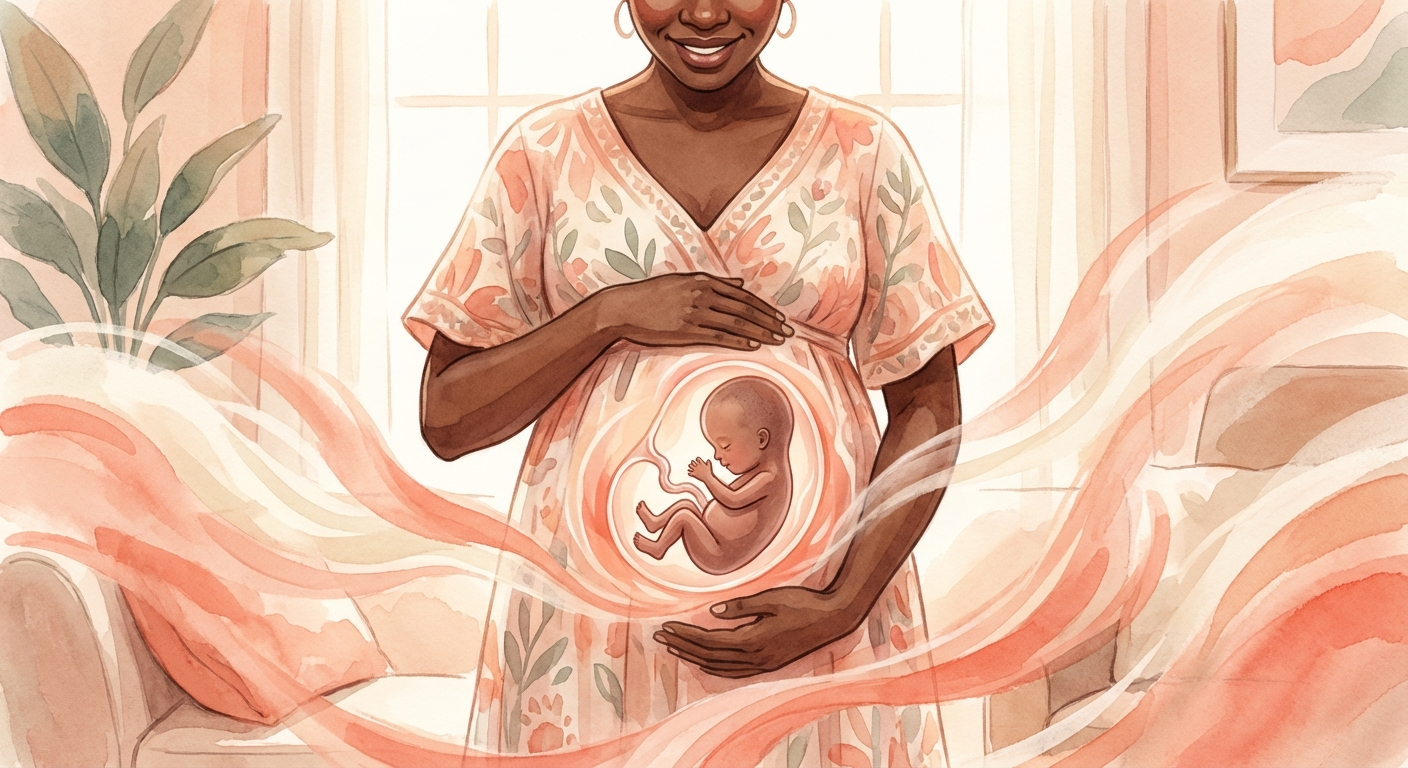
Week 9
Your baby is the size of a
Cherry
2.3 cm
Length
2 g
Weight
9 Weeks Pregnant: Officially a Fetus
At 9 weeks pregnant, your baby is about the size of a cherry (approximately 22 mm or 0.9 inches). This week marks an important milestone: your baby officially becomes a fetus (no longer an embryo). The tail has disappeared, and your baby is looking more human every day.
What’s Happening at 9 Weeks Pregnant?
Week 9 is a transitional week in your pregnancy. Your baby has completed the embryonic period and enters the fetal period—a significant developmental milestone. This transition means that all essential organs and structures have been established, and the focus now shifts to growth and refinement for the remainder of pregnancy.
The embryonic tail that gave your baby a tadpole-like appearance has now completely disappeared. Your baby’s body is straightening out, and the head, while still large, is becoming more proportional to the body. Facial features are increasingly distinct, and limbs are growing longer.
For many people, week 9 is still challenging symptom-wise, but relief is on the horizon. Morning sickness and fatigue typically peak around weeks 9-10 and begin improving by weeks 11-13 as your body adjusts to pregnancy hormones.
How Big is My Baby at 9 Weeks?
Your baby at 9 weeks is about the size of a cherry or grape, measuring approximately 22-30 millimeters (0.9-1.2 inches) from crown to rump and weighing about 2 grams (0.07 ounces).
Your baby has nearly tripled in size since week 6 and will continue growing rapidly. The proportions are becoming more balanced, with the body lengthening relative to the head.
Baby Development at Week 9
Significant developmental milestones mark this transition to the fetal period:
Embryo to fetus: This is the official week your baby becomes a fetus. The term “embryo” is used during weeks 1-8 when organs and structures are forming. “Fetus” refers to the developmental period from week 9 until birth, when these structures grow and mature.
Tail disappearance: The small tail-like structure at the base of the spine has completely disappeared, giving your baby a more human appearance.
Facial refinement: Your baby’s face is looking increasingly human:
- Eyes are fully formed but still covered by fused eyelids (they won’t open until around week 28)
- Eyelids are more developed
- The nose is more prominent with visible nostrils
- Earlobes are forming
- The mouth and lips are well-defined
- Tiny tooth buds for baby teeth are developing under the gums
Fingers and toes: The webbing between fingers and toes has disappeared, leaving distinct, separate digits. Fingernails and toenails are beginning to form.
Organ development:
- Heart: Divided into four chambers and beating at 140-170 beats per minute
- Liver: Producing blood cells
- Kidneys: Beginning to produce urine
- Intestines: Growing longer and beginning to move from the umbilical cord into the abdomen
- Reproductive organs: Developing internally, though external genitalia aren’t yet distinguishable on ultrasound
- Pancreas: Producing insulin
- Gallbladder: Developing
Muscle and movement: Muscles are developing throughout the body, and your baby can make spontaneous movements—hiccups, stretches, and tiny kicks—though you can’t feel them yet. These movements are crucial for muscle and joint development.
Bone development: Bones are continuing to harden from cartilage. The skeleton is becoming more defined.
Brain development: The brain continues growing rapidly, with nerve cells multiplying and forming complex connections. Basic brain structures are in place.
Placenta function: The placenta is maturing and taking over most hormone production from your ovaries. It’s now efficiently providing oxygen and nutrients to your baby and removing waste products.
Common Symptoms at 9 Weeks Pregnant
Week 9 often represents the peak of first-trimester symptoms for many people:
Morning sickness: Nausea and vomiting may still be intense. For most people, symptoms peak around weeks 9-10 and begin improving by weeks 11-14.
Extreme fatigue: You may feel exhausted and need significantly more sleep than usual. Your body is supporting rapid fetal growth and producing about 50% more blood.
Frequent urination: Your growing uterus is pressing on your bladder, and increased blood volume means your kidneys are working harder.
Breast tenderness: Your breasts may be noticeably larger and tender. You might need to go up a bra size.
Food aversions and cravings: Strong preferences for or against certain foods are common and can change daily.
Heightened sense of smell: Many people develop an extremely sensitive sense of smell that can trigger nausea.
Increased vaginal discharge: Thin, milky-white discharge (leukorrhea) is normal and caused by increased estrogen.
Mood swings: Hormonal fluctuations combined with physical discomfort can cause emotional ups and downs.
Visible veins: You may notice more visible veins on your breasts, abdomen, and legs due to increased blood volume.
Slightly visible baby bump: While most people don’t have an obvious bump yet, you may notice your waistline thickening or your pants feeling tighter.
Dizziness: Hormonal changes can cause blood pressure fluctuations, leading to occasional dizziness or lightheadedness.
When to Call Your Doctor
Contact your healthcare provider if you experience:
- Heavy bleeding or passing clots
- Severe abdominal pain, especially one-sided
- Severe, persistent vomiting with signs of dehydration (dark urine, dizziness, dry mouth)
- Fever above 100.4°F (38°C)
- Painful urination
- Sudden swelling of hands, feet, or face
Tips for Week 9
Hang in there: If symptoms are overwhelming, remember that most people feel significantly better by weeks 12-14. You’re getting close to the easier second trimester.
Manage nausea creatively: Try different strategies to find what works—cold foods, salty snacks, protein-rich meals, ginger, vitamin B6, acupressure wristbands, or prescription anti-nausea medications.
Prevent dizziness: Change positions slowly (don’t jump up quickly), stay hydrated, eat regular small meals to maintain blood sugar, and avoid standing for long periods.
Support your breasts: Invest in a well-fitting, supportive bra. Consider a sleep bra for nighttime comfort.
Stay hydrated: Drink plenty of water throughout the day. If plain water is unappealing, try adding lemon, cucumber, or mint.
Eat nutrient-dense foods when possible: When you can stomach food, choose nutrient-rich options like fruits, vegetables, whole grains, lean proteins, and healthy fats.
Rest without guilt: Your body needs extra rest. Take naps, go to bed early, and reduce commitments.
Start planning for the second trimester: Research prenatal genetic screening tests you may want to consider (typically offered between weeks 10-13), and think about when you might want to announce your pregnancy.
Connect with your partner: Share how you’re feeling and what you need. Pregnancy can be isolating when symptoms are intense.
Be kind to yourself: This is a challenging phase. Give yourself grace and celebrate making it to the fetal period—a major milestone.
Keep Your Pregnancy Organized with Nooko
Set your pregnancy using the first day of your last menstrual period or the due date from a dating scan to follow week-specific guidance and your due-date countdown. Use the journal for selected symptoms and private notes, save bump photos, manage checklists, reminders, and prenatal appointments, and share supported updates with an approved partner.
Nooko provides general information and recording tools, not medical advice or diagnosis. Some features require Nooko+.
Download Nooko on the App Store
References
- Cleveland Clinic. (2025). “Fetal Development: Week-by-Week Stages of Pregnancy.” https://my.clevelandclinic.org/health/articles/7247-fetal-development-stages-of-growth
- Mayo Clinic. (2024). “Fetal development: The first trimester.” https://www.mayoclinic.org/healthy-lifestyle/pregnancy-week-by-week/in-depth/prenatal-care/art-20045302
- The Bump. (2025). “9 Weeks Pregnant: Baby Development, Symptoms and Tips.” https://www.thebump.com/pregnancy-week-by-week/9-weeks-pregnant
- American College of Obstetricians and Gynecologists. (2025). “How Your Fetus Grows During Pregnancy.” https://www.acog.org/womens-health/faqs/how-your-fetus-grows-during-pregnancy
- BabyCenter. (2025). “9 weeks pregnant: Symptoms, baby development, and more.” https://www.babycenter.com/pregnancy/week-by-week/9-weeks-pregnant
- Mayo Clinic. (2024). “Symptoms of pregnancy: What happens first.” https://www.mayoclinic.org/healthy-lifestyle/getting-pregnant/in-depth/symptoms-of-pregnancy/art-20043853
Get Nooko Updates
Pregnancy tips and product updates, sent occasionally.
No spam. Privacy policy. Consumer health privacy. Unsubscribe anytime.
Ready to start tracking?
Download Nooko free — your pregnancy companion from week 1 to birth.