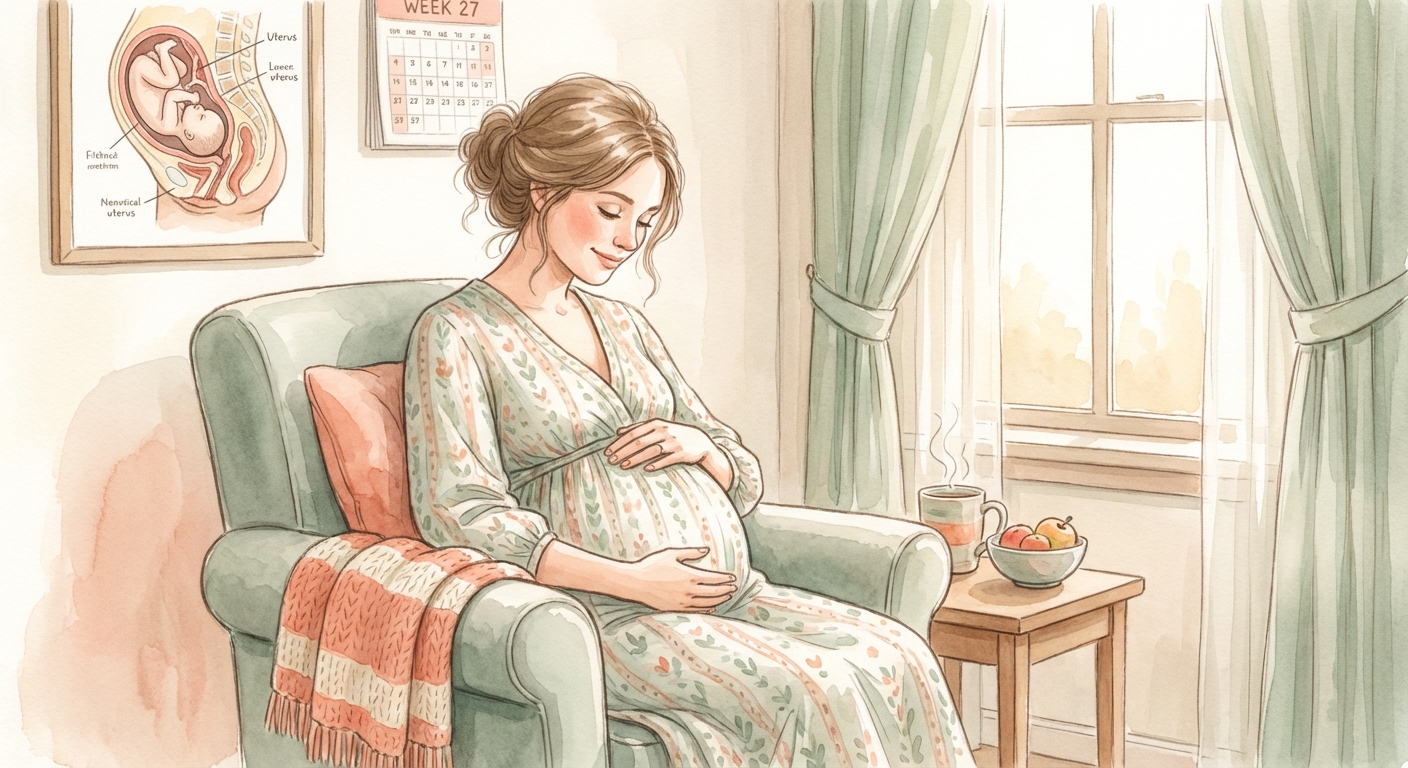
Week 27
Your baby is the size of a
Cabbage
36.6 cm
Length
875 g
Weight
27 Weeks Pregnant: Entering the Third Trimester
At 27 weeks pregnant, you’ve officially entered the third trimester—the home stretch! Your baby is about the size of a cauliflower, measuring around 14.4 inches (36.6 cm) from head to heel and weighing approximately 2 pounds (900 grams). Your baby’s lungs are maturing, their brain is developing rapidly, and they’re practicing breathing movements in preparation for life outside the womb.
Welcome to the Third Trimester!
Week 27 marks an exciting milestone: you’ve completed two-thirds of your pregnancy and entered the final trimester. While every trimester has its unique challenges and joys, the third trimester is all about final preparations—both for your baby’s development and your readiness for birth and parenthood.
The third trimester (weeks 28-40+) is characterized by rapid fetal growth, increasing physical discomfort as your baby grows, more frequent prenatal appointments, and final preparations for labor, delivery, and bringing baby home.
Many people experience a mix of emotions during this time: excitement about finally meeting their baby, anxiety about labor and parenthood, physical exhaustion from carrying increasing weight, and nesting instincts that drive them to prepare their home.
How Big is My Baby at 27 Weeks?
Your baby at 27 weeks is about the size of a cauliflower, measuring approximately 14.4 inches (36.6 cm) from crown to heel.
Weight-wise, your baby has reached a significant milestone: around 2 pounds (900 grams). From this point forward, your baby will gain approximately half a pound per week as they build the fat stores needed for temperature regulation after birth.
While your baby is still quite lean and wrinkled, they’re starting to look more like a newborn, with more proportional body segments and developing facial features.
Baby Development at Week 27
Remarkable development continues in the third trimester:
Lung maturation accelerates: Your baby’s lungs are producing increasing amounts of surfactant, the substance that prevents air sacs from collapsing. While babies born at 27 weeks have better survival rates than earlier weeks (around 85-90% with intensive care), lung immaturity remains a primary concern for preterm infants.
Breathing practice: Your baby practices breathing movements by inhaling and exhaling small amounts of amniotic fluid. These practice sessions are essential for developing the muscles and coordination needed for breathing after birth.
Brain development: Rapid brain growth continues, with the brain tissue developing more complex folds (gyri and sulci) that increase surface area. Your baby’s brain can now direct rhythmic breathing and regulate body temperature to some extent.
Sleep-wake cycles: Your baby has distinct periods of sleep and wakefulness. During REM (rapid eye movement) sleep, your baby’s brain is highly active, and they may be dreaming.
Sense of taste develops: Your baby’s taste buds are fully formed, and they can distinguish between sweet and bitter flavors in the amniotic fluid, which is influenced by what you eat.
Eyes can open and close: Your baby can fully open and close their eyes now and may respond to light filtering through your abdomen.
Hiccups: You may feel rhythmic, repetitive movements—these are hiccups! Fetal hiccups are completely normal and are thought to help develop the diaphragm and respiratory system.
Increased movement: Your baby is very active now, though you may notice more defined patterns. Some babies are more active in the evening, while others move throughout the day.
Common Symptoms at 27 Weeks Pregnant
Third trimester symptoms are beginning to set in:
Fatigue: Many people experience renewed tiredness in the third trimester as their body works hard to support a rapidly growing baby. The physical demands of carrying extra weight also contribute.
Back and pelvic pain: As your baby grows and your center of gravity shifts, back pain often intensifies. Pelvic pain from loosening ligaments (caused by the hormone relaxin) is also common.
Shortness of breath: Your expanding uterus pushes upward on your diaphragm, reducing lung capacity. This improves after your baby “drops” into your pelvis in late pregnancy.
Frequent urination: Your baby is pressing on your bladder, and you may feel like you need to urinate constantly—even right after you’ve just gone.
Heartburn and indigestion: The valve between your stomach and esophagus is relaxed by pregnancy hormones, allowing stomach acid to travel upward. Your growing uterus also compresses your stomach.
Braxton Hicks contractions: These practice contractions may become more frequent in the third trimester. Your uterus tightens and then relaxes, but the contractions are irregular and don’t become progressively stronger or closer together.
Leg cramps: Painful calf or foot cramps, often occurring at night, are common in the third trimester. Causes may include circulation changes, pressure on blood vessels, or mineral imbalances.
Restless leg syndrome: An irresistible urge to move your legs, especially when resting, affects some pregnant people.
Swelling: Mild swelling in your feet, ankles, and hands is normal as your body retains extra fluid. Elevating your feet and staying hydrated helps.
Sciatic nerve pain: If your baby is positioned in a way that puts pressure on your sciatic nerve, you may feel sharp, shooting pain down your buttock and leg.
When to Call Your Doctor
Contact your healthcare provider immediately if you experience:
- Regular contractions (4 or more per hour)
- Fluid leaking or gushing from your vagina
- Vaginal bleeding
- Severe abdominal pain
- Sudden severe swelling, especially with headache or vision changes (possible preeclampsia)
- Fewer fetal movements than usual
- Severe, persistent headache
Tips for Week 27
Schedule your next appointments: In the third trimester, prenatal visits typically increase to every two weeks starting around week 28, then weekly after week 36.
Take childbirth education classes: If you haven’t enrolled yet, now is the time. Classes typically run 4-6 weeks and are best started in the third trimester so the information is fresh when you go into labor.
Start kick counting: While formal kick counting recommendations vary, beginning around week 28 is typical. Familiarize yourself with your baby’s movement patterns. You should feel at least 10 movements within 2 hours during your baby’s active times.
Plan for maternity leave: Finalize arrangements with your employer and understand your rights under FMLA or your company’s policies.
Create or refine your birth plan: Think about your preferences for pain management, who you want present, newborn procedures (delayed cord clamping, skin-to-skin contact), and more. Discuss your preferences with your provider.
Interview pediatricians: If you haven’t selected a pediatrician, schedule interviews now. You’ll need to provide the pediatrician’s information to the hospital before delivery.
Get your flu shot if you haven’t: Flu vaccination is recommended for all pregnant people to protect both you and your baby.
Practice pelvic floor exercises: Kegels can help prevent urinary incontinence and may aid in labor and postpartum recovery.
Stay active: Continue gentle exercise with your provider’s approval—walking, swimming, prenatal yoga—to maintain strength and stamina for labor.
Address sleep issues: Invest in a pregnancy pillow, establish a calming bedtime routine, limit fluids before bed, and sleep on your left side for optimal blood flow.
Eat small, frequent meals: This helps manage heartburn, keeps blood sugar stable, and prevents that overly full feeling.
Preparing for Baby’s Arrival
The third trimester is preparation time:
Start your baby registry: If you haven’t already, create a registry with essential items like a car seat, crib, diapers, clothing, and feeding supplies.
Begin nesting: Many people feel an intense urge to organize and prepare their home in the third trimester. While nesting can be productive, don’t overdo it—save energy for labor!
Pack your hospital bag: While you don’t need to pack it completely yet, start thinking about what you’ll want—comfortable clothing, toiletries, phone charger, snacks, and items for baby.
Install the car seat: It’s wise to install the car seat several weeks before your due date. Many fire stations and hospitals offer free car seat installation checks.
Prep frozen meals: Cooking large batches of meals to freeze can be a lifesaver in those early postpartum weeks when you’re exhausted and adjusting.
Record the Final Stretch with Nooko
Follow your current week and due-date countdown, use the kick counter to record count-to-10 sessions and elapsed time, and use the contraction timer to record duration and spacing. Session histories and some other features require Nooko+.
Nooko does not monitor your baby, assess labor, or decide when you should seek care. Follow your healthcare professional’s movement-counting and labor plan, and contact them promptly about changes or concerns.
Download Nooko on the App Store
References
- Cleveland Clinic. (2025). “Fetal Development: Week-by-Week Stages of Pregnancy.” https://my.clevelandclinic.org/health/articles/7247-fetal-development-stages-of-growth
- American College of Obstetricians and Gynecologists. (2025). “How Your Fetus Grows During Pregnancy.” https://www.acog.org/womens-health/faqs/how-your-fetus-grows-during-pregnancy
- BabyCenter. (2025). “27 Weeks Pregnant.” https://www.babycenter.com/pregnancy/week-by-week/27-weeks-pregnant
- Mayo Clinic. (2024). “Fetal development: The 3rd trimester.” https://www.mayoclinic.org/healthy-lifestyle/pregnancy-week-by-week/in-depth/fetal-development/art-20045997
- Merck Manual. (2025). “Respiratory Distress Syndrome in Newborns.” https://www.merckmanuals.com/home/children-s-health-issues/lung-and-breathing-problems-in-newborns/respiratory-distress-syndrome-in-newborns
- Mennella JA, et al. (2001). “Prenatal and postnatal flavor learning by human infants.” Pediatrics, 107(6), E88.
- Cleveland Clinic. (2025). “Fetal Development: Week-by-Week Stages of Pregnancy.”
- American College of Obstetricians and Gynecologists. (2025). “Exercise During Pregnancy.” https://www.acog.org/womens-health/faqs/exercise-during-pregnancy
- American College of Obstetricians and Gynecologists. (2025). “Problems of the Digestive System.” https://www.acog.org/womens-health/faqs/problems-of-the-digestive-system
- American College of Obstetricians and Gynecologists. (2025). “Prenatal Care.” https://www.acog.org/womens-health/faqs/prenatal-care
- American College of Obstetricians and Gynecologists. (2025). “Fetal Movement Counting.” https://www.acog.org/
- Centers for Disease Control and Prevention. (2025). “Flu Vaccine and Pregnancy.” https://www.cdc.gov/flu/pregnant/index.htm
Get Nooko Updates
Pregnancy tips and product updates, sent occasionally.
No spam. Privacy policy. Consumer health privacy. Unsubscribe anytime.
Ready to start tracking?
Download Nooko free — your pregnancy companion from week 1 to birth.