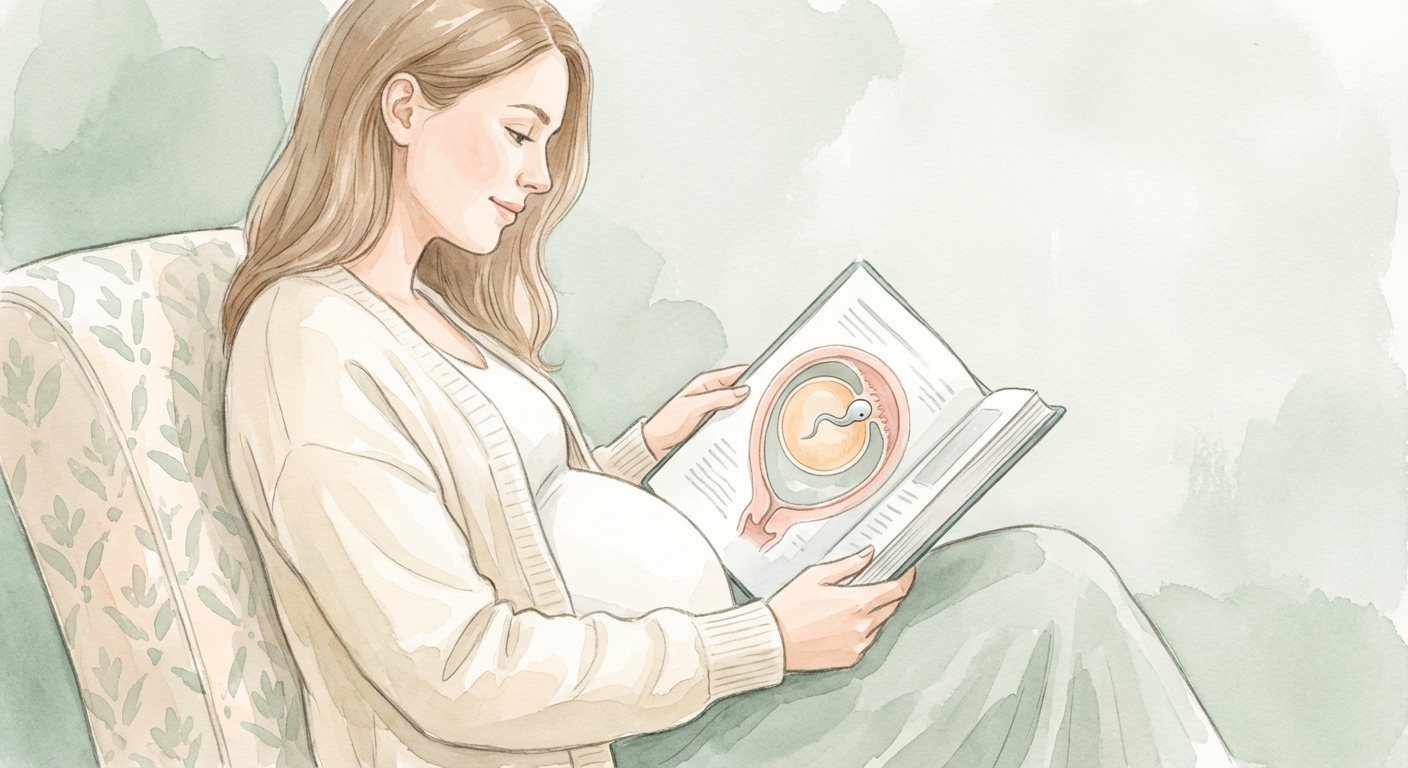
Week 5
Your baby is the size of a
Sesame Seed
2 mm
Length
< 1 g
Weight
5 Weeks Pregnant: Your Baby's Heart Begins to Beat
At 5 weeks pregnant, your baby is about the size of a sesame seed (2 mm). This week marks an incredible milestone: your baby’s heart begins to beat, pulsing about 110 times per minute by week’s end. The neural tube—which will become the brain and spinal cord—is also forming.
What’s Happening at 5 Weeks Pregnant?
Week 5 is when pregnancy becomes real for many people. You’ve likely just confirmed your pregnancy with a positive test, and your body is rapidly adjusting to support your growing baby.
Your embryo (the medical term until week 8) is developing at an astonishing rate. What was a simple cluster of cells just days ago is now taking on a more defined structure, with the beginnings of major organ systems forming. The embryo is still incredibly small, but it’s no longer just a ball of cells—it’s developing distinct layers that will become different parts of your baby’s body.
This is also when pregnancy symptoms often intensify. Rising levels of human chorionic gonadotropin (hCG) and progesterone can trigger nausea, fatigue, and other early pregnancy signs. While these symptoms can be uncomfortable, they’re typically a sign that your pregnancy is progressing normally.
How Big is My Baby at 5 Weeks?
Your baby at 5 weeks is about the size of a sesame seed, measuring approximately 2 millimeters (0.08 inches) in length. While still tiny, your baby has grown ten times larger than just a week ago—a rate of growth that’s truly remarkable.
At this size, your baby resembles a curved shape, almost like a tiny tadpole. The embryo has a distinct head end and tail end, though it doesn’t yet look recognizably human.
Baby Development at Week 5
Despite being smaller than a grain of rice, your baby is undergoing critical development this week:
Heart development: One of the most significant milestones this week is the formation of your baby’s heart. What begins as a simple tube starts to fold and develop into chambers. By the end of week 5, this primitive heart begins to beat and pump blood through tiny vessels. The heartbeat starts at about 110 beats per minute, though it’s not yet strong enough to hear with a regular stethoscope.
Neural tube formation: The neural tube is forming along what will become your baby’s back. This structure will develop into the brain, spinal cord, and all other neural tissue of the central nervous system. This is why folic acid is so critical during early pregnancy—it helps prevent neural tube defects.
Three germ layers: The embryo now consists of three distinct layers of cells, each with a specific destiny:
- Ectoderm (outer layer): Will form the nervous system, skin, hair, nails, tooth enamel, and mammary and sweat glands
- Mesoderm (middle layer): Will develop into the heart, circulatory system, bones, muscles, kidneys, and reproductive organs
- Endoderm (inner layer): Will become the digestive system, liver, pancreas, and lungs
Placenta and umbilical cord: The cells that will form the placenta and umbilical cord are multiplying rapidly. While the placenta won’t be fully functional for several more weeks, it’s already beginning the critical work of producing hormones and preparing to provide oxygen and nutrients to your baby.
Amniotic sac: The fluid-filled sac surrounding your baby continues to develop, providing cushioning and a stable temperature for optimal development.
Early facial features: Tiny depressions that will eventually become your baby’s eyes are beginning to form, along with the earliest structures of the ears. The beginnings of the mouth and jaw are also taking shape.
Common Symptoms at 5 Weeks Pregnant
Week 5 is often when pregnancy symptoms become more noticeable. However, some people still feel completely normal—both experiences are within the range of healthy pregnancies.
Nausea and morning sickness: Despite its name, morning sickness can strike at any time of day. Many people start experiencing nausea around week 5 as hormone levels rise. For some, this means occasional queasiness; for others, it can be more severe. Morning sickness typically peaks between weeks 8-11 and improves by the second trimester.
Extreme fatigue: Your body is producing more blood, your heart rate is increasing, and your metabolism is ramping up. All of this takes energy, which is why many people feel exhausted during the first trimester. This isn’t just “tired”—it’s a deep, overwhelming need for rest.
Frequent urination: Even though your uterus is still quite small, hormonal changes increase blood flow to your kidneys, causing them to produce more urine. You may find yourself needing to urinate more often, especially at night.
Breast tenderness: Your breasts may feel swollen, tender, or sensitive to touch. Some people notice their breasts feel heavier or fuller. The areolas (the area around your nipples) may also begin to darken.
Cramping: Mild cramping is common as your uterus begins to expand. This feels similar to menstrual cramps but is usually milder. As long as cramping isn’t severe and isn’t accompanied by heavy bleeding, it’s typically normal.
Spotting: Light spotting can occur in early pregnancy and doesn’t necessarily indicate a problem. However, if you experience bright red bleeding or heavy bleeding, contact your healthcare provider.
Mood swings: Fluctuating hormones can affect your emotional state, making you feel more weepy, irritable, or anxious. These mood changes are a normal part of early pregnancy.
Food aversions and cravings: You may suddenly find that foods you once enjoyed now seem unappealing, or you may develop intense cravings for specific foods. These changes are driven by hormones and are very common.
When to Call Your Doctor
Contact your healthcare provider if you experience:
- Heavy bleeding (soaking through a pad in an hour) or passing clots
- Severe cramping or sharp pain, especially on one side
- Dizziness, fainting, or shoulder pain (can indicate ectopic pregnancy)
- Severe vomiting that prevents you from keeping down any food or liquids
- Fever above 100.4°F (38°C)
Tips for Week 5
Continue prenatal vitamins: Make sure you’re taking a prenatal vitamin with at least 400-800 mcg of folic acid daily. Neural tube development is happening right now, making this nutrient essential.
Manage nausea: If morning sickness has started, try eating small, frequent meals throughout the day rather than three large meals. Bland, easily digestible foods like crackers, toast, or rice may be easier to tolerate. Some people find that eating something small before getting out of bed helps. Ginger tea or ginger candies may also provide relief.
Rest when needed: Listen to your body’s signals. If you’re exhausted, rest. Your body is doing the incredible work of creating another human being, and it needs extra energy for that task.
Stay hydrated: Drink plenty of water throughout the day. If nausea makes plain water unappealing, try adding a slice of lemon or lime, or sip on clear broth or herbal tea (check that any herbal tea is pregnancy-safe).
Eat nutrient-dense foods: When you can stomach food, focus on nutrient-rich options. Include fruits, vegetables, whole grains, lean proteins, and healthy fats when possible. Don’t worry if your diet isn’t perfect right now—do the best you can.
Avoid harmful substances: Continue to avoid alcohol, tobacco, and recreational drugs. Be cautious with medications, including over-the-counter options. Always check with your healthcare provider before taking any medication or supplement.
Be gentle with yourself: Early pregnancy can be physically and emotionally challenging. Give yourself permission to slow down, say no to commitments, and prioritize self-care.
Schedule your first prenatal appointment: If you haven’t already, call your healthcare provider to schedule your first prenatal visit. Most offices schedule this appointment between weeks 8-12, but they’ll want to know you’re pregnant so they can provide guidance in the meantime.
Consider when to share your news: There’s no “right” time to tell people about your pregnancy. Some people share immediately, while others wait until the second trimester. Do what feels right for you.
Keep Your Pregnancy Organized with Nooko
Set your pregnancy using the first day of your last menstrual period or the due date from a dating scan to follow week-specific guidance and your due-date countdown. Use the journal for selected symptoms and private notes, save bump photos, manage checklists, reminders, and prenatal appointments, and share supported updates with an approved partner.
Nooko provides general information and recording tools, not medical advice or diagnosis. Some features require Nooko+.
Download Nooko on the App Store
References
- Cleveland Clinic. (2025). “Fetal Development: Week-by-Week Stages of Pregnancy.” https://my.clevelandclinic.org/health/articles/7247-fetal-development-stages-of-growth
- BabyCenter. (2025). “5 Weeks Pregnant: Symptoms, Cramping & More.” https://www.babycenter.com/pregnancy/week-by-week/5-weeks-pregnant
- Johns Hopkins Medicine. (2025). “10 Early Signs of Pregnancy.” https://www.hopkinsmedicine.org/health/wellness-and-prevention/10-early-signs-of-pregnancy
- BabyCenter. (2025). “5 Weeks Pregnant: Symptoms, Cramping & More.”
- Mayo Clinic. (2024). “Fetal development: The first trimester.” https://www.mayoclinic.org/healthy-lifestyle/pregnancy-week-by-week/in-depth/prenatal-care/art-20045302
- American College of Obstetricians and Gynecologists. (2025). “How Your Fetus Grows During Pregnancy.” https://www.acog.org/womens-health/faqs/how-your-fetus-grows-during-pregnancy
- Mayo Clinic. “Symptoms of pregnancy: What happens first.” https://www.mayoclinic.org/healthy-lifestyle/getting-pregnant/in-depth/symptoms-of-pregnancy/art-20043853
- Medical News Today. (2018). “5 weeks pregnant: Symptoms, hormones, baby development, and more.” https://www.medicalnewstoday.com/articles/297018
- Johns Hopkins Medicine. (2025). “The First Trimester.” https://www.hopkinsmedicine.org/health/wellness-and-prevention/the-first-trimester
- NHS. “Signs and symptoms of pregnancy.” https://www.nhs.uk/pregnancy/trying-for-a-baby/signs-and-symptoms-of-pregnancy/
- American College of Obstetricians and Gynecologists. “Nutrition During Pregnancy.”
Get Nooko Updates
Pregnancy tips and product updates, sent occasionally.
No spam. Privacy policy. Consumer health privacy. Unsubscribe anytime.
Ready to start tracking?
Download Nooko free — your pregnancy companion from week 1 to birth.