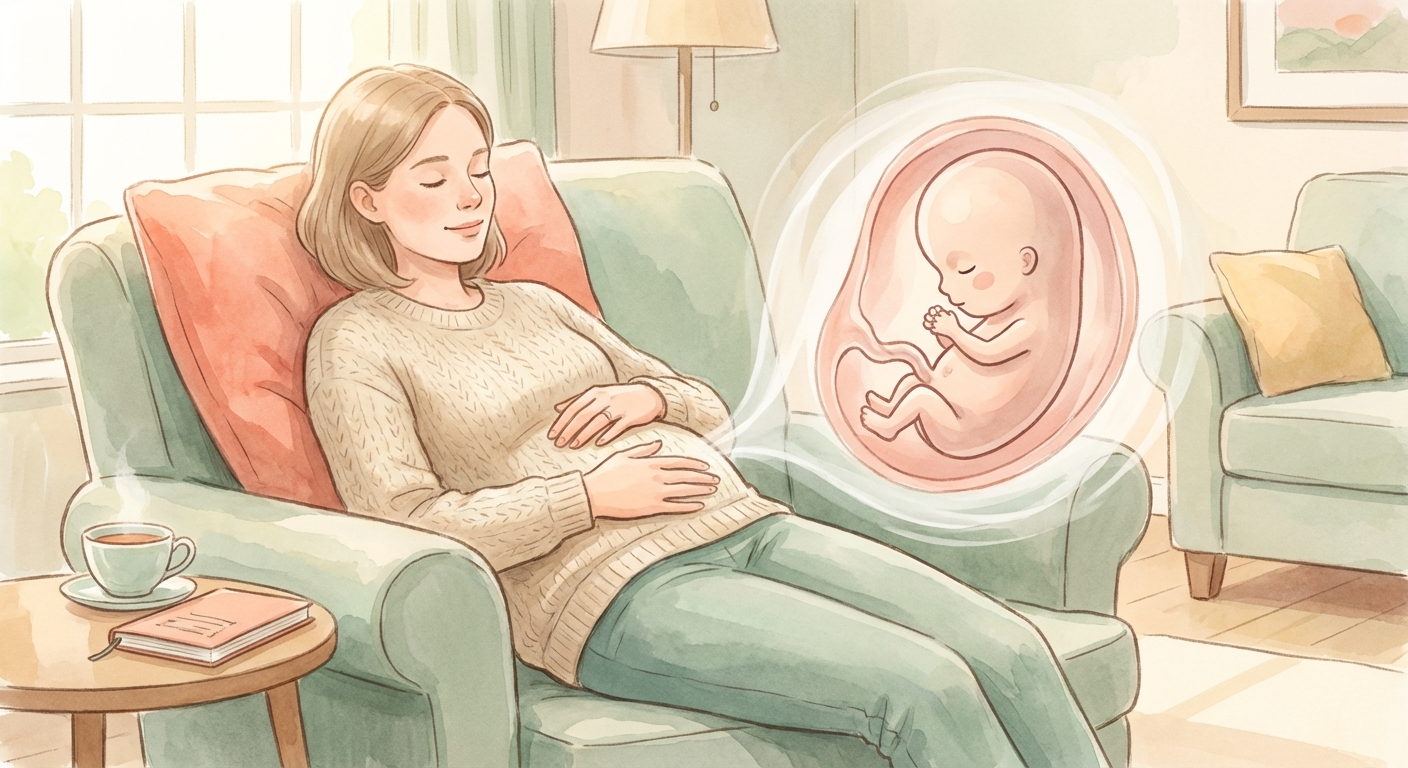
Week 7
Your baby is the size of a
Blueberry
1.3 cm
Length
< 1 g
Weight
7 Weeks Pregnant: Rapid Brain and Facial Development
At 7 weeks pregnant, your baby is about the size of a blueberry (approximately 10 mm or 0.4 inches). Your baby’s brain is developing rapidly, growing about 100,000 new brain cells per minute. Arms and legs are lengthening, and facial features are becoming more defined.
What’s Happening at 7 Weeks Pregnant?
Week 7 marks incredible growth for your baby, who has doubled in size since last week. The focus of development this week is on the brain and face, with remarkable progress happening daily.
Your baby is still an embryo (the fetal stage begins at week 9) and has a distinctive curved shape, though it’s starting to straighten out. The head is still disproportionately large compared to the body, making up about half of your baby’s total length—this is because the brain requires significant space as it develops rapidly.
For many pregnant people, week 7 brings peak pregnancy symptoms. Morning sickness may be at its worst, and fatigue can feel overwhelming. Remember that these intense symptoms typically ease by the second trimester, and they’re often a sign that your pregnancy hormones are doing their job.
How Big is My Baby at 7 Weeks?
Your baby at 7 weeks is about the size of a blueberry, measuring approximately 10 millimeters (0.4 inches) from crown to rump and weighing less than 1 gram (about 0.04 ounces).
Despite still being tiny, your baby has grown significantly—about doubling in size each week. The embryo is beginning to look less curved and more elongated, though it still has a tail-like structure at the bottom of the spinal cord that will disappear in the coming weeks.
Baby Development at Week 7
This week brings remarkable developmental milestones:
Brain development: Your baby’s brain is growing at an astonishing rate—producing approximately 100,000 new brain cells every minute. The brain is dividing into three primary sections: the forebrain, midbrain, and hindbrain. Each section will eventually develop into specific brain structures that control different functions.
Facial features: The face is taking shape with recognizable features:
- Eyes are developing, though they’re still on the sides of the head (they’ll move to the front later)
- The nose is beginning to form with two tiny nostrils
- Mouth and tongue are developing
- Tiny tooth buds are forming under the gums (these will eventually become baby teeth)
- Ears are developing both internally and externally
Limb development: Arms and legs are lengthening and becoming more defined. The paddle-shaped appendages from last week are developing notches that will become fingers and toes. Your baby may be making small, jerky movements, though you can’t feel them yet.
Organ development:
- The heart is now divided into right and left chambers and is beating at 150-170 beats per minute—about twice as fast as your own heart
- The liver is producing red blood cells
- The kidneys are in place and preparing to function
- The intestines are developing (still partially in the umbilical cord)
- The appendix and pancreas are forming
- Lungs are beginning to develop bronchi (air tubes)
Umbilical cord: The umbilical cord is now fully formed and functioning, delivering oxygen and nutrients to your baby and removing waste products.
Digestive system: The esophagus (tube connecting mouth to stomach) and trachea (windpipe) are beginning to separate. The stomach and intestines are forming.
Bone development: Cartilage is forming that will eventually harden into bones. The skeleton is beginning to take shape, though bones won’t start hardening for several more weeks.
Common Symptoms at 7 Weeks Pregnant
Week 7 is often when pregnancy symptoms peak in intensity. Here’s what you might be experiencing:
Intense morning sickness: Nausea and vomiting often reach their peak around weeks 7-9. This is caused by rapidly rising hCG levels. Remember that “morning sickness” is a misnomer—it can happen any time of day or night.
Extreme fatigue: You may feel exhausted no matter how much sleep you get. Your body is working overtime to support your baby’s rapid development, and progesterone has a sedating effect that contributes to tiredness.
Frequent urination: Your kidneys are processing about 25% more blood than before pregnancy, leading to increased urine production. You might wake up multiple times per night to use the bathroom.
Breast tenderness: Your breasts may feel swollen, tender, or painful to touch. Veins may become more visible as blood flow increases. The areolas may continue to darken.
Food aversions and cravings: Strong aversions to certain foods or smells are common. You might crave foods you normally wouldn’t eat or develop intense preferences.
Heightened sense of smell: Many people develop a superhuman sense of smell during early pregnancy, which can trigger or worsen nausea.
Excess saliva: Some people produce more saliva than usual during early pregnancy (a condition called ptyalism), which can contribute to nausea.
Mood swings: Hormonal fluctuations combined with physical discomfort and the emotional adjustment to pregnancy can cause mood changes, irritability, or tearfulness.
Bloating and constipation: Progesterone slows digestion, which can cause uncomfortable bloating and constipation.
Mild cramping: As your uterus expands, you may feel mild cramping or pulling sensations in your lower abdomen.
Minimal weight change: Most people haven’t gained much weight yet (if any), and some lose weight due to morning sickness. This is typically normal—your baby doesn’t need many extra calories during the first trimester.
When to Call Your Doctor
Contact your healthcare provider immediately if you experience:
- Heavy bleeding or passing clots
- Severe, persistent vomiting preventing you from keeping down any food or liquids for 24+ hours
- Severe one-sided abdominal pain
- Dizziness, fainting, or shoulder pain (can indicate ectopic pregnancy)
- Fever above 100.4°F (38°C)
- Painful urination or burning sensation
Tips for Week 7
Manage severe morning sickness: If nausea is debilitating, talk to your healthcare provider about safe anti-nausea medications like vitamin B6 and doxylamine (Unisom) or prescription options. Don’t suffer in silence—help is available.
Eat small, frequent meals: Instead of three large meals, try eating small amounts every 1-2 hours. An empty stomach can worsen nausea, so keeping a little food in your system may help.
Stay hydrated: If you’re vomiting frequently, hydration is critical. Sip water throughout the day, try ice chips, or drink electrolyte beverages. If you can’t keep fluids down, contact your doctor—you may need IV fluids.
Rest without guilt: Your body needs extra rest right now. Take naps, go to bed early, and don’t feel bad about it. Growing a human is exhausting work.
Identify and avoid triggers: Pay attention to what triggers your nausea—certain smells, foods, or situations—and avoid them when possible.
Try ginger or peppermint: Many people find ginger tea, ginger candies, or peppermint helpful for nausea. These are generally safe during pregnancy.
Wear comfortable clothing: Your breasts may be tender and your abdomen may feel bloated. Wear loose, comfortable clothes and consider a supportive bra.
Take prenatal vitamins: If your prenatal vitamin makes you nauseous, try taking it with food, at bedtime, or switching to a different brand or format (gummies, liquids).
Be patient with yourself: This is a tough phase. Most people find that symptoms improve significantly by weeks 12-14. You’re doing great, even if it doesn’t feel like it.
Communicate your needs: Let your partner, family, or friends know how you’re feeling and what you need. Don’t be afraid to ask for help.
Keep Your Pregnancy Organized with Nooko
Set your pregnancy using the first day of your last menstrual period or the due date from a dating scan to follow week-specific guidance and your due-date countdown. Use the journal for selected symptoms and private notes, save bump photos, manage checklists, reminders, and prenatal appointments, and share supported updates with an approved partner.
Nooko provides general information and recording tools, not medical advice or diagnosis. Some features require Nooko+.
Download Nooko on the App Store
References
- Mayo Clinic. (2024). “Fetal development: The first trimester.” https://www.mayoclinic.org/healthy-lifestyle/pregnancy-week-by-week/in-depth/prenatal-care/art-20045302
- Cleveland Clinic. (2025). “Fetal Development: Week-by-Week Stages of Pregnancy.” https://my.clevelandclinic.org/health/articles/7247-fetal-development-stages-of-growth
- NHS. (2024). “You and your baby at 7 weeks pregnant.” https://www.nhs.uk/pregnancy/week-by-week/1-to-12/7-weeks/
- BabyCenter. (2025). “7 weeks pregnant: Symptoms, baby development, and more.” https://www.babycenter.com/pregnancy/week-by-week/7-weeks-pregnant
- The Endowment for Human Development. (2006). “7 to 8 Weeks | Prenatal Overview.” https://www.ehd.org/dev_article_unit8.php
- March of Dimes. (2023). “Pregnancy Week by Week.” https://www.marchofdimes.org/pregnancy-week-week
- American College of Obstetricians and Gynecologists. (2025). “How Your Fetus Grows During Pregnancy.” https://www.acog.org/womens-health/faqs/how-your-fetus-grows-during-pregnancy
Get Nooko Updates
Pregnancy tips and product updates, sent occasionally.
No spam. Privacy policy. Consumer health privacy. Unsubscribe anytime.
Ready to start tracking?
Download Nooko free — your pregnancy companion from week 1 to birth.